By
In the preceding analysis—the first installment of what has become a three-part series—I introduced the Guerrilla Leader Theory (GLT), a framework that provides a static taxonomy of leadership for the human domain. It posits that a leader’s effectiveness is a function of two distinct variables: transactional competence and relational connectedness. This results in a 2×2 model of leadership archetypes, ranging from the failed “Type A” Ineffective Leader to the idealized “Type D” Guerrilla Leader who demonstrates high proficiency in both attributes. This initial framework answers the crucial question of what effective leadership looks like, providing a clear target for leader development and selection.
However, a static model, while essential for defining key variables, is insufficient for navigating the fluid, ever-changing reality of a conflict zone. It presents a portrait, but what leaders need is a roadmap. The most critical questions for any operator on the ground remain: When does competence matter more than connectedness, and vice versa? Why do leaders who are initially successful—often lauded for their tactical acumen—so often fail to secure a lasting peace? What is the underlying engine that drives the evolution of a partnership from a fragile, transactional alliance into a durable, trust-based one?
The answer—the bridge between the static “what” and the dynamic “how”—lies in the Risk to Follower model. This model serves as the theoretical engine for the entire Guerrilla Leader Theory. It provides the crucial why by explaining the shifting psychology of the indigenous partner force, tying their primary needs directly to the level of existential risk they face. It is a diagnostic tool that allows a leader to read the human terrain in real time. Understanding this model is the key to knowing when to lead with decisive action and when to lead with empathetic connection. It is the essential next step in moving beyond short-term tactical success toward long-term strategic victory.
Defining the Model: A Contest of Utility
At its core, the Risk to Follower model posits that a partner force’s valuation of a leader’s approach is not fixed; it is a direct response to their perceived level of danger. The model illustrates this by plotting the perceived utility of two competing leadership approaches against the degree of risk to the follower.
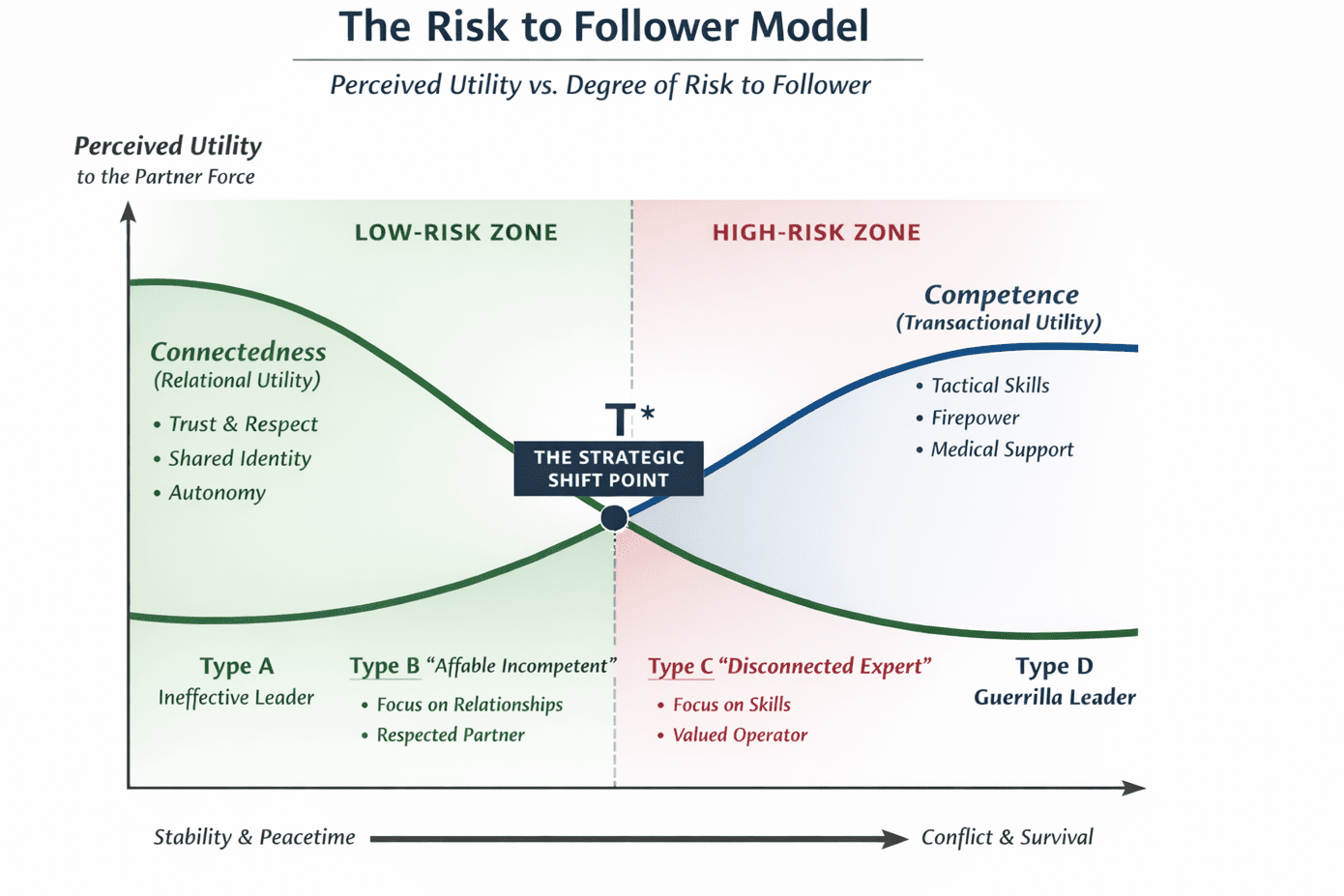
Figure 1. Risk to Follower Model (From part 1)
Perceived utility refers to the partner force’s judgment of which leadership attribute most directly contributes to their survival and success in the current environment. It is not an abstract preference—it is a dynamic, experience-driven assessment shaped by fear, security, and lived outcomes.
The Horizontal Axis: Degree of Risk to Follower
This axis represents the spectrum of danger, from a low-risk environment characterized by relative stability and routine operations on the left, to a high-risk environment defined by intense combat and existential threat on the right. A leader’s first and most important task is to accurately diagnose where their operational environment sits on this spectrum.
In practice, this diagnosis is not intuitive—it must be assessed through observable indicators within the partner force. These include, but are not limited to:
- The frequency and intensity of enemy contact
- The partner force’s tolerance for casualties
- Their willingness to operate independently versus reliance on external enablers
- The degree of dependence on foreign support (e.g., fires, intelligence, logistics)
- The overall stability of the local population and operating environment
These indicators collectively reveal not just the objective level of risk, but the perceived level of risk—which is what ultimately drives behavior.
The Competing Curves: Competence vs. Connectedness
Two curves move across this spectrum, representing the shifting value of the GLT’s core attributes:
The Utility of Competence (The Transactional Curve):
This curve represents the value of a leader’s transactional skills—their ability to deliver tangible, often life-saving results such as effective tactical planning, firepower integration, and medical support. The utility of competence is directly proportional to risk. When risk is highest, the need for competence is absolute. In a fight for survival, a partner force prioritizes a technically and tactically proficient leader above all else.
The Utility of Connectedness (The Relational Curve):
This curve represents the value of a leader’s relational skills—their ability to build trust, demonstrate respect, and foster a shared identity. The utility of connectedness is inversely proportional to risk. As risk decreases and survival becomes less immediate, the partner force’s desire for dignity, autonomy, and mutual respect becomes paramount.
The Heart of the Model: The T* Strategic Shift Point
Where these two curves intersect lies the model’s central concept: the T* Strategic Shift Point (hereafter referred to as T*). This is not merely a graphical crossover; it is a critical inflection point in the psychological state of the partner force. It marks the moment at which their dominant need transitions from one leadership attribute to the other.
To the Right of T* (The High-Risk Zone):
In this zone, survival is paramount. The partner force will tolerate—and often value—a “Type C” Disconnected Expert. The leader’s technical proficiency is a life-saving asset, and their lack of relational warmth is an acceptable, even irrelevant, cost. Conversely, a “Type B” Affable Incompetent is a liability. In this environment, a leader proves their worth through action, results, and the ability to reduce immediate threats.
To the Left of T* (The Low-Risk Zone):
In this zone, the environment has stabilized—often as a direct result of the leader’s earlier competence. However, the underlying rules have changed. Competence is now assumed; it has become the baseline expectation rather than the differentiator. The partner force’s priorities shift toward respect, autonomy, and shared ownership.
It is here that the Disconnected Expert, once perceived as indispensable, becomes a source of friction. Their purely transactional approach—no longer masked by the urgency of survival—is now interpreted as dismissive, controlling, or even illegitimate. Their utility declines sharply, not because their competence has diminished, but because its relative value has collapsed in the eyes of the partner force.
A partner force that once relied entirely on external planning, fires, and direction may begin to resist those same inputs as stability increases—interpreting continued control not as support, but as constraint. This is the moment where tactical success, if not adapted, begins to generate strategic risk.
Understanding T* is therefore strategic because failure to recognize and adapt to this shift is a primary cause of mission failure. It is the precise moment a leader must demonstrate that they are more than a tactical asset—that they can evolve into a true partner.
Conclusion: Implications for the Adaptive Leader and the Path Ahead
The Risk to Follower model is more than a theoretical construct; it is the engine that drives the Guerrilla Leader Theory. It provides the essential why that gives the leadership archetypes their explanatory and predictive power. It demonstrates, with causal clarity, why the technically brilliant but relationally detached “Type C” leader is structurally predisposed to fail in the long run, and why only the “Type D” Guerrilla Leader—who masters both competence and connectedness—can achieve sustainable success.
By recognizing that a partner force’s needs are a direct reflection of their perceived risk, leaders move beyond a one-size-fits-all approach to leadership. They gain a diagnostic framework for interpreting the human terrain as it exists in the present—and for anticipating how it will evolve over time.
This model serves as the critical bridge between the static taxonomy introduced in the first paper and the dynamic realities of real-world intervention. The Guerrilla Leader framework defines what the ideal leader looks like; the Risk to Follower model explains why that leader must embody two distinct, often competing skill sets. It clarifies that success is not achieved by choosing between competence and connectedness, but by possessing both—and, critically, by knowing when each is required.
Because successful interventions inherently reduce risk over time, every leader is guaranteed to cross T*—the only question is whether they recognize it.
This raises a final, unavoidable challenge. If every intervention follows a predictable trajectory from high risk to low risk, how does a leader manage that transition across the full lifecycle of a conflict? What happens when these shifting dynamics are plotted against time, and how does this create a recurring pathway to strategic failure for those who fail to adapt?
Answering this question—how to operationalize this model across time and avoid the inherent pitfalls of long-term intervention—will be the focus of the final installment in this series. It is there that these concepts will be integrated into a unified framework for not just winning the fight, but winning the peace.