
By
Introduction
The US abduction of Venezuelan President Nicolas Maduro and his wife in January 2026 was a spectacular demonstration of a surgical kill/capture operation, a capability Joint Special Operations Command (JSOC) perfected over thousands of such operations in Afghanistan and Iraq. A recent Pentagon news release quotes Secretary of Defense Pete Hegseth as touting the historically unprecedented nature of the Maduro raid.
In this article we explain what is novel about the combination of tactics, techniques, and technology on display. We describe how JSOC liberated battlespace from a two-dimensional battlefield construct, replacing a linear construct with a mobile, four-dimensional column of battlespace. Known as a restricted operating zone (ROZ), this digitally enabled configuration allows a ground operator to control an air stack overhead, obviating the need for a fire control line to deconflict air and ground assets (note: The air stack can also be controlled from the air.) The mobility of the ROZ replaces a linear battlefield construct with something operationally and conceptually new: a flexible column of battlespace that can be opened anytime, anyplace.
The significance of fundamentally reconfiguring the relationship between air and ground forces, enabling them to operate together in a single battlespace, cannot be understated. Yet the tactical features and their strategic implications of the ROZ have yet to be fully appreciated. Outside of irregular warfare, kill/capture missions had been reserved for hostage rescue, counterpiracy, and counter-weapons of mass destruction (WMD) operations. What the Maduro raid revealed is how nimble and strategically impactful ROZ warfare can be.
From Battlefield to Battlespace
Early US attempts at kill/capture missions failed or floundered due to a lack of coordination and speed. In 1979, Operation Eagle Claw, the attempted rescue of American hostages in Iran, ended tragically when a US helicopter and transport aircraft collided, bursting into flames and killing eight servicemembers. A decade later, the capture of Panamanian dictator Manuel Noriega required a full-scale invasion that lasted two weeks and included a ten-day stand-off after Noriega took refuge in the Vatican Mission.
These missions operated on a linear battlefield model. In a linear model, air and ground forces are used on the same battlefield but for different target sets. To avoid fratricide, fielded forces do significant planning to coordinate lines of battle that deconflict air operations from ground operations. At this more “traditional” end of the continuum, airpower is used to penetrate enemy air defenses and gain air superiority. As friendly air forces roll-back enemy air defenses and destroy enemy aircraft, ground forces can proceed into contact with enemy ground forces.
The battlefield is defined in terms of rear, close, and deep areas. Rear areas are those behind friendly combat troops that provide support and reinforcements to ground forces in direct combat with the enemy. The close battlefield indicates the area of ground combat operations. Beyond that and well into enemy held territory is considered the deep area.
To deconflict friendly ground forces in direct contact with the enemy or rearward from airstrikes on enemy targets, commanders use linear terms of reference, frequently defined by terrain features. As defined in Department of Defense Joint Doctrine, two key terms are Fire Support Coordination Line (FSCL) and forward edge of the battle area (FEBA) (see Figure 1). A FSCL is a coordination measure that is defined by the ground forces commander but enables the “expeditious engagement of surface targets of opportunity beyond the coordinating measure.” In other words, friendly ground forces operate short of the FSCL, allowing air assets to engage targets beyond the FSCL without risk of hitting the friendly forces. The FEBA is “the foremost limits of a series of areas in which ground combat units are deployed…designated to coordinate fire support, the positioning of forces, or the maneuver of units.”
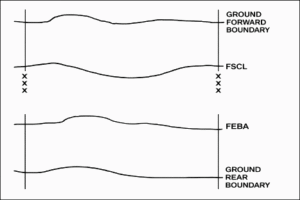
Figure 1. Linear battlefield (AI generated image).
Generally speaking, the FEBA is the battle line along which ground forces are engaged with the enemy and providing much of their own organic firepower (artillery, mortars). Beyond the FEBA ground forces can employ organic firepower to engage enemy targets at distance, but short of the FSCL. The FSCL indicates the line beyond which airpower can be employed without risk to friendly ground forces and is also deconflicted from the ground forces’ organic firepower. Under this construct, air and land forces operated in battlespaces that were separate from each other and moved in a linear fashion degrading enemy positions and targets along the way.
What distinguishes ROZ warfare is the ability to deconflict air and ground assets without relying on a FSCL of battle to prevent friendly fire. Rather than a linear battle that commences and proceeds at an uncertain pace, ROZ operations utilize the element of surprise to open a column of battlespace for a predetermined length of time, conduct operations within that battlespace, and then collapse it as the mission concludes. This Aggregate-Operate-Disaggregate construct allows teams of air and ground assets to get in and get out without taking and holding territory for a prolonged period or establishing full command of the air.
ROZ warfare evolved out of the US counterinsurgency operations in Afghanistan and Iraq. Instead of a linear construct, the battlefield was partitioned into mission-specific horizontally and vertically defined kill-boxes. A kill box is a fire support control measure that clears a defined target area (of approximately 44km x 44km) for fires and restricts the airspace above. It is a precursor to today’s ROZ in the sense that it uses fixed geographic lines to separate presumed enemies (and hence valid targets) from presumed friendlies. But it does so in a way that allows for more flexibility in temporal and spatial resolution than a forward line of battle. It still uses geographic lines, but it allows for local adaptations of the overall ‘front line’ script.
The advantage of a kill box over a linear battlefield construct is that it enables a faster ops-tempo by creating a predesignated zone of deconfliction. The target area within a kill box can be further subdivided into what is known as a ‘keypad’ configuration, allowing some quadrants to remain ‘hot’ (active), while others are designated ‘cold’ (see Figure 2). Likewise, the airspace can be designated closed (restricted) or ‘open.’ Once the kill box is designated ‘hot’ fires carried out within it do not require further coordination between air and ground forces. The kill box enables designated targets to be interdicted without fear of fratricide.
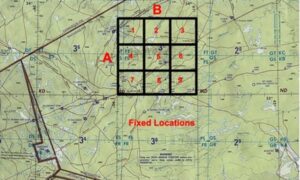
Figure 2. Notional kill box with keypad designation, source unknown.
Over time, even as conventional forces institutionalized kill boxes within joint doctrine, JSOC moved away from employing them in kill/capture missions. They favored a more customizable restricted operating zone (ROZ). The ROZ introduced agility and flexibility into the kill box construct. Originally a feature of a kill box, the ROZ referred to the air space above the target area (the term is still used by conventional forces in this manner).
In contrast to the fixed latitudinal and longitudinal coordinates of a kill-box, the ability to control an air stack from the ground in real time enables ROZs to become temporally and geographically flexible columns of battlespace. In Iraq, kill-boxes were activated and deactivated. Today ROZs can be opened and closed anywhere the US military has established operational access. Battlespace is a four-dimensional cone of space and time in which Special Operations air and ground forces aggregate over a single target at a specified time.
Digitally networking the air and ground components made real-time coordination possible. JSOC replaced verbal communication between air and ground forces, which was slow and laborious, with sensor technology and network linkages that enabled air and ground power to share real-time imagery. Crucially, hand-held video receivers gave operators on the ground (or in the air), known as Joint Terminal Air Controllers (JTACs), access to the aerial view. Sharing a common video feed enables the JTAC not just to call in airstrikes from a single close air support platform, but to direct an entire stack of air assets from close air support to unmanned aerial vehicles, fighter jets, and satellites.

Figure 3. Notional restricted operating zone (ROZ), AI generated image.
Once JSOC liberated the ROZ from the kill box by implementing a new, technologically enabled solution to the problem of deconflicting air and ground forces, it was able to accelerate the pace of its missions. The strategy was to stamp out primary nodes at a rate faster than the network could regenerate, opening and closing ROZs rapidly in pursuit of new targets through a process known as a kill chain.
A kill chain consists of a five-step targeting cycle: Find, Fix, Finish, Exploit, Analyze (F3EA). Forces drawn from across the services worked together to figure out who or what their target was, locate it, kill or capture it, gather new information from documents, people and equipment, and analyze the new intelligence to identify the next target starting the cycle over again.
At the outset of the War on Terror the kill chain turned slowly. In August 2004 JSOC carried out 18 in all of Iraq. Once SOCOM worked the kinks out, however, the cycle accelerated exponentially. By August 2006, Joint Special Operations Forces were doing 10 raids a night—300 a month—and gathering intelligence in 27 countries simultaneously.
By 2011, JSOC had fully divorced the ROZ from fixed geographic points, demonstrating its mobility by successfully conducting a targeted killing of Osama Bin Laden within Pakistani borders.
Conclusion
Successfully seizing the president of a sovereign nation from a heavily armed compound within a matter of hours was historically unprecedented, however what is truly significant are the capabilities on display. In this article we have pulled back the curtain on surgical strike kill/capture missions to reveal them as part of a larger revolution in tactics, techniques and technologies. We have shown how ROZ warfare evolved out of SOF man-hunting operations in Afghanistan and Iraq, passing through three distinct operational configurations:
- Linear Battlefield: Geographic two-dimensional line drawn as a convention to allow procedural ground-air coordination, useful along a fixed, linear battlefield.
- Kill box: Geographic three-dimensional space pre-defined boxes which recognize temporal and spatial discontinuities in the progress of the plan but still rely on convention rather than networking for deconfliction.
- ROZ Warfare: Customized, four-dimensional “Aggregate-Operate-Disaggregate” network-centered operations that are synchronized and deconflicted using visual communications and technology.
The fact that this capability evolved in the context of the asymmetric operations of the War on Terror initially limited the imagination of its strategic implications. However, just because this revolution was in low-intensity conflict does not mean it is insignificant. The implications are vast for military ethics, international law, and the flexible use of military force. Perhaps most significantly, however, ROZ warfare holds out revolutionary potential for the future of armed conflict because it is characterized by innovation across all three elements of strategy: A new set of ends (targeted kill/capture counter-terrorism missions) combined with a shift in means (digital technologies and broadband networks) drove an innovation in ways (agile, real-time deconfliction of air and ground assets). ROZ warfare enables the US to kill and/or capture targets that are hard to find, but easy to finish, as opposed to conventional warfare in which targets are easy to find but typically more difficult to finish, completing a trajectory of global full spectrum dominance.