News & Briefings
Get the latest news and SOF commentary here. Your source for all news SOF since 2017.

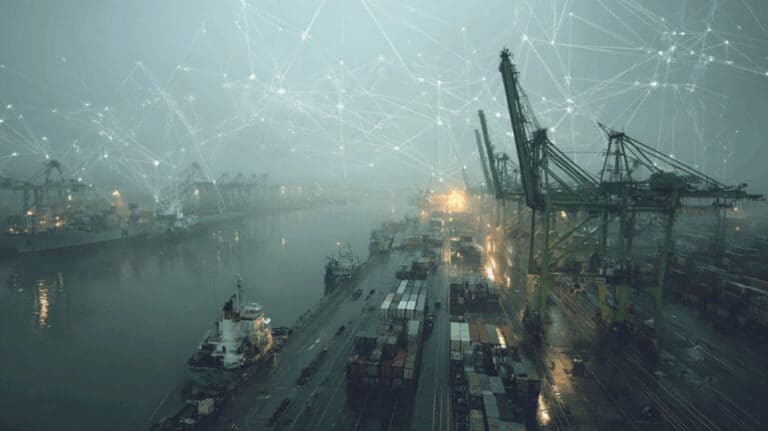
The solution to maritime logistics challenges may not be a purely military one but, rather, one pulled from the playbook used by ghost fleets, smugglers and other illicit networks.
Mobility, sustainment and logistics are the heartbeat of warfare because they are among the most important core functions that enable and empower operations, combat or otherwise. In other words, these functions help convert a nation’s resources into kinetic combat power. A military cannot fight effectively without the ability to move forces and maintain continuous resupply in an operational theatre. But in any war the unexpected and the overlooked can be relied on to assert themselves in ways that challenge commanders to think creatively about complex problems. In a future Indo-Pacific war, how can the United States military and its partners execute effective logistics in an environment which will almost certainly be contested from garrison to combat?

A Vision for Layered Continental Defense
For the U.S., North American security and homeland defense are top priorities in an era of great power competition. Hypersonic and cruise missile technology eludes the capacity of
legacy detection systems¹ and, along with emerging drone capabilities and swarm tactics, North American continental defense can no longer be assumed. The U.S. president issued
Executive Order 14186 in January 2025 that outlines a vision for layered continental defense due to the proliferation of advanced air and missile threats posing strategic dilemmas to the
U.S.² Known as Golden Dome, the concept encompasses forward base defense, asymmetric warfare, space integration, and collaboration with allies and partners.³ This presents new
challenges and opportunities for Special Operations Forces (SOF) as mission focus rebalances counterterrorism mission sets with active campaigning against peer and near-
peer adversaries like China and Russia.
Mobile, secure, and scalable mesh network technology significantly increases U.S. Army special operations forces’ (ARSOF) communications flexibility, operational security, resilience, and survivability during high-risk missions in hostile, denied, or contested operational environments. The purpose of this article is to explore an innovative tactical communications capability that can help inform the Army Transformation Initiative and enable “the ARSOF Advantage” five lines of effort by providing “ARSOF in Contact” with secure, off-grid mesh network technology.

In 1982 Ronald Reagan signed National Security Decision Directive 32. It was eight pages long. It named the enemy. It defined the threat. It laid out the global and regional objectives. It integrated diplomatic, informational, economic, and military power. It told the commanders and the agencies how to act, what to prioritize, and where to accept risk. It directed a political warfare strategy that ran from Central America to Europe to Asia. And it put America on the final glide path to winning the Cold War.
It was the gold standard because it was a real strategy. It was executable. It was focused. It had an enemy. It had a theory of victory.
Today, and not at some distant point in the future, AI algorithms can shape public perception, disrupt markets, and steer missiles. Given the depth and breadth of its capabilities, it’s increasingly clear that the real frontier of artificial intelligence isn’t the battlefield but in the gray zone. Long before a shot is ever fired, nations are now locked in constant competition in an ill-defined space where influence operations, economic coercion, and cyber campaigns persistently blur the lines between peace and war. Over the last 10 years, many nations have tested how far they can push competitor states without tripping into open conflict, and AI is rapidly becoming the accelerant for these actions.
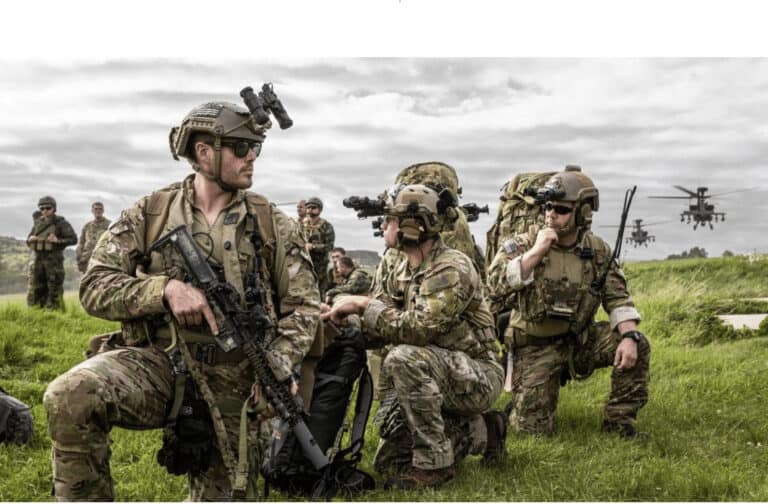
For nearly seventy years, U.S. Army Special Forces have thrived at the intersection of people, ideas, and technology. From the OSS agents operating behind enemy lines in World War II to the Green Berets riding with Afghan horsemen in 2001, Special Forces have always fused the technical with the human. Radios, air controllers, and precision munitions have been tools—but never the center of gravity. The decisive factor has always been the credibility that comes from empowering others to fight for themselves.
No results found.
Stay Up To Date
Subscribe to Our Newsletter and Stay Up to Date with the Latest Special Operations Forces Support News and Events