News & Briefings
Get the latest news and SOF commentary here. Your source for all news SOF since 2017.
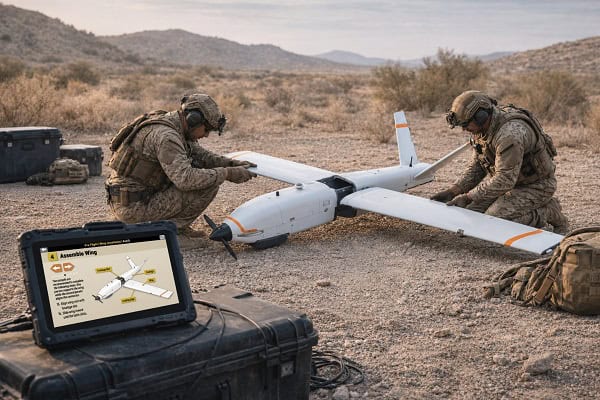
On my first deployment to the Middle East with 5th Special Forces Group, I was tasked with setting up a notoriously complex tactical SATCOM node on a rooftop. I was the team’s 18D (Medical Sergeant), and most of the team, including our 18E (Communications Sergeant), was on the other side of a mountain. Getting that terminal to acquire a satellite, with nothing but my Echo talking me through it over the phone, was next to impossible. The equipment worked. The knowledge existed. It just lived in one man’s head on the wrong side of a mountain.
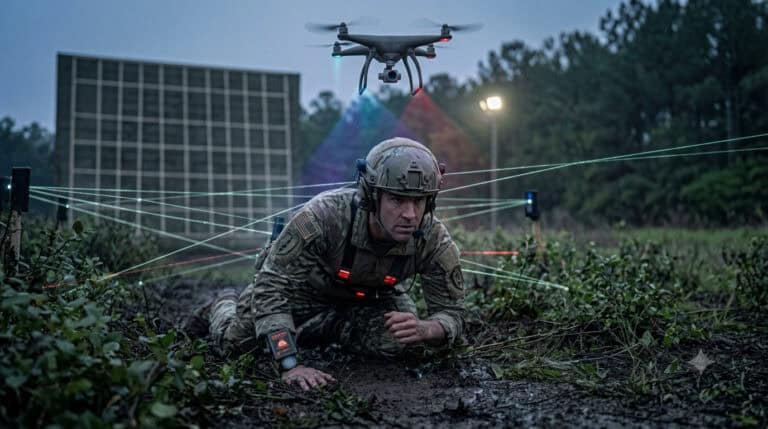
Central to our arguments throughout this four-part series, we propose “adaptive performance” as a central organizing SOF performance construct, encompassing cognitive, behavioral, and interpersonal adjustments under changing demands. To thrive in the turbulence highlighted in Parts 2 (The Two Trinities and the Human-Domain Advantage) and 3 (The Technology Layer – Cyber, Space, and Human-Machine Teaming in 2040), SOF assessment, selection, and qualification (ASQ) systems must screen for at least three pillars of adaptive performance: mental adaptability, the ability to shift thinking frameworks quickly when mission parameters change; stress adaptability, maintaining metabolic and cognitive composure as information volatility increases; and interpersonal adaptability, fluidly integrating on the fly with diverse teams, including foreign partners, inter-agency civilians, and autonomous systems. A wealth of prior research has solidified the need for such adaptive requirements in SOF missions, and we believe these requirements will only increase due to the factors discussed above. Importantly, not all performance-relevant attributes are equally trainable. This distinction carries direct implications for selection design.
PANAMA CITY, Panama –
Joint Task Force-Bravo concludes operations for their annual, bilateral exercise PANAMAX-Alpha in Panama on July 27, 2026. PANAMAX-Alpha, sponsored by U.S. Southern Command, serves as a critical training platform for U.S. and Panamanian forces.
The exercise focuses on bilateral cooperation with Panama, allowing both nations to refine their security capabilities, streamline logistics, and coordinate humanitarian support efforts.
“This year PANAMAX-Alpha focused on preparing forces for the higher tempo that will take place during the multinational exercise, PANAMAX, in August,” shared U.S. Army Capt. Mac Michael, JTF-Bravo lead PANAMAX planner. “With every mission and training scenario, we are building the muscle memory and tactical interoperability required for shared security challenges across the hemisphere.”
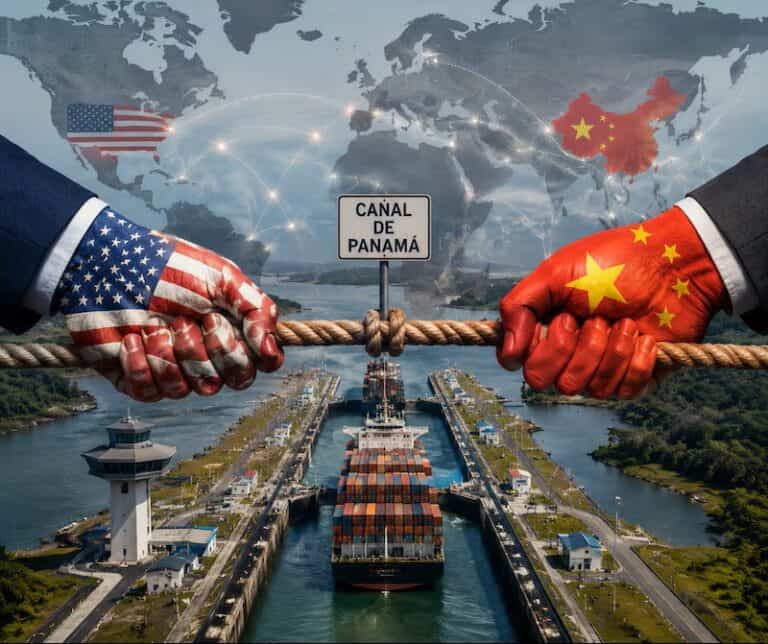
In recent years, China has paired its economic expansion with growing media and digital influence efforts, using strategic communications to strengthen its presence in key sectors such as ports, telecommunications, energy, and logistics. Through state media, embassies, social media platforms, and local partners, Beijing promotes narratives that portray China as a reliable partner and a driver of development. These campaigns are not solely intended to improve China’s image. They also seek to shape the political and social environment in which projects involving strategic infrastructure are debated. The goal is to build support for Chinese investments while reducing public scrutiny of potential risks related to economic dependencies, control of critical infrastructure, and security concerns.
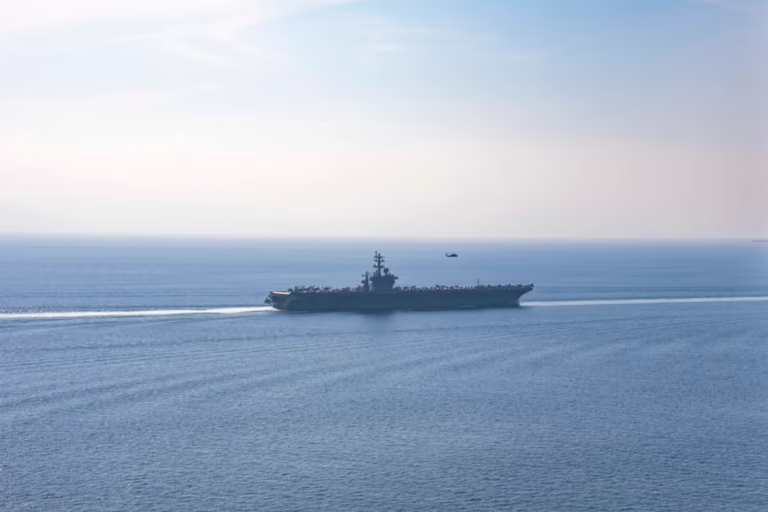
In mid-March 2026, satellite imagery confirmed what many defense analysts had long feared: the USS Gerald R. Ford and USS Abraham Lincoln carrier strike groups had quietly abandoned their forward offensive positions near Iran. The Ford moved south into the central Red Sea near Jeddah; the Abraham Lincoln relocated to the southwestern waters of Oman near Salalah, moving it from less than 350 kilometers to more than than 1,100 from the Iranian coastline. The official language was clinical: a “controlled reallocation of naval assets.” The strategic signal was harder to spin. The most powerful surface warships on earth had been repositioned out of missile range of a state that the United States was simultaneously striking. Whether one calls that prudence or precedent, it deserves serious analysis.
The cognitive warfare tools demonstrated in Ukraine and Iran are not exclusively a high-intensity conflict problem. They are reshaping the gray zone as well, and the adversaries employing them below the threshold of kinetic engagement are operating faster than the doctrinal frameworks governing US competition-phase operations. This article applies the Praxis AI Doctrine’s Cognitive Warfare Operationalization Model to the below-threshold information environment and argues that special operations and interagency practitioners need cognitive warfare literacy as urgently as they need kinetic readiness.
No results found.
Stay Up To Date
Subscribe to Our Newsletter and Stay Up to Date with the Latest Special Operations Forces Support News and Events