News & Briefings
Get the latest news and SOF commentary here. Your source for all news SOF since 2017.
IW is a form of warfare where states and non-state actors campaign to assure or coerce states or other groups through indirect, non-attributable, or asymmetric activities. b. IW provides an important complement to other joint force activities, operations, and investments in both competition and conflict. (1) IW strategies and tactics can involve the threat or use of force, including the use of non-lethal weapons, for purposes other than physical domination over an adversary. (2) States and non-state actors can conduct IW when they cannot achieve their strategic objectives by non-warfare activities or conventional warfare. c. Within the DoD, IW is a joint force activity conducted by conventional forces and special operations forces (SOF).
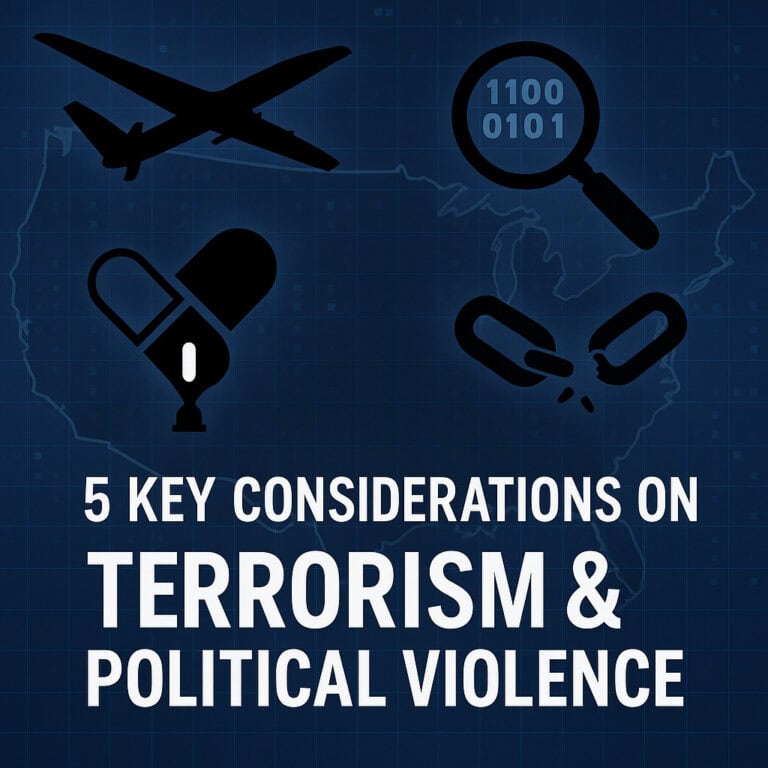
The evolving threat of terrorism and political violence in the United States cannot be understood without observing technological change, institutional memory, and societal resilience. Recent discussions underscore five urgent considerations: (1) sustaining lessons from two decades of counterterrorism, (2) preparing for AI and drone-enabled battlefields, (3) confronting the misuse of commercial technologies, (4) maximizing open-source intelligence collaboration, and (5) analyzing the connection between counternarcotics and counterterrorism. Across all five lies a central truth: adversaries exploit division, while unity across government, private sector, and civil society is America’s most credible form of deterrence.
Almost in tandem, Russia and China have expanded their hostilities with Taiwan and Ukraine, respectively, to allies of each.
Russia sent fighter aircraft into the territory of the North Atlantic Treaty Organization (NATO), which is supplying weapons and intelligence to help Ukraine fend off Russia’s full-scale invasion.
At sea and in the sky, China is moving to tighten its grip in areas around Taiwan, the self-governing island China claims as its own, with low-intensity intimidation.
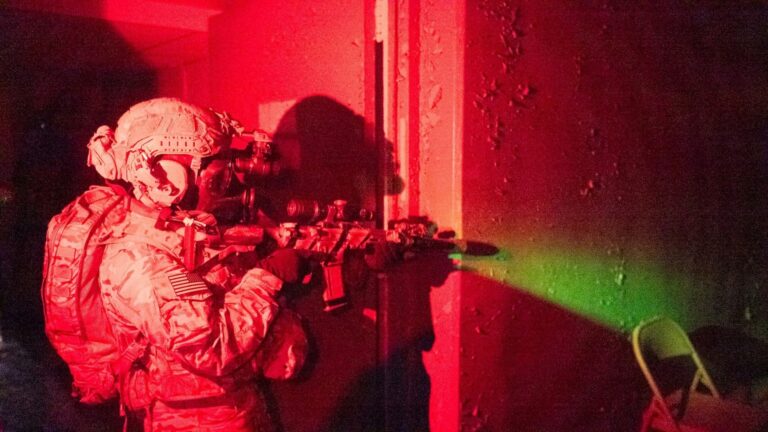
BLUF: The Department of Defense’s fixation on large-scale combat operations (LSCO) threatens to sideline Special Forces, who are often viewed by outsiders as bespoke capabilities unsuited for wars in the future. Yet adversaries are already waging irregular warfare (IW) as their strategy of choice, an arena for which the Special Forces are uniquely organized and trained. Unless Special Forces can clearly articulate and demonstrate how they bridge IW and LSCO, the Army risks losing its most effective instrument for competition below the threshold of war and for shaping conditions before high-end conflict.
Innovations in five areas are transforming the character and nature of irregular warfare (IW). Described herein as “vehicles,” these enablers are influencing outcomes from Ukraine to Taiwan and the Middle East. The vehicles are space, drones, artificial intelligence (AI), unconventional maritime operations, and global supply chains.
IW is about people, cognition, incentives, coercion, assurance, and legitimacy. The five vehicles don’t change any of that. Instead, these vehicles should be thought of as the most important tools used to promote or “deliver” Irregular Warfare. They are deeply interconnected, with their interdependencies amplifying their collective impact, necessitating new approaches for strategists and policymakers. Each section of this article outlines how one vehicle relies on one or more of the others.
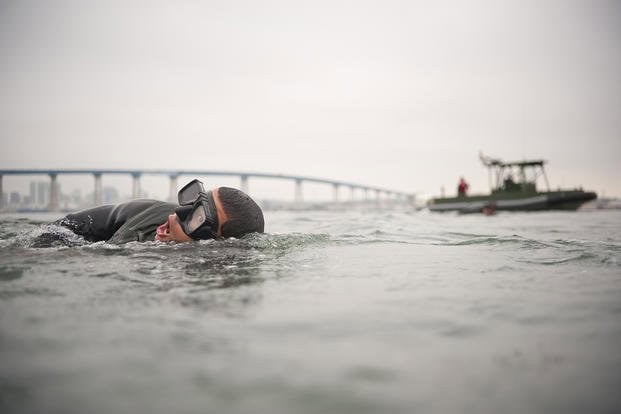
A dangerous illusion in Washington persists, believing capability shortfalls in irregular warfare are solvable before the bullets and drove fly during conflict. The lack of urgency in the procurement cycle, fractured modernization, and interagency stovepipes are just part of the process. But in the Indo-Pacific littorals, the process is the problem eroding readiness and lethality. Senate Armed Services Committee Testimony.
No results found.
Stay Up To Date
Subscribe to Our Newsletter and Stay Up to Date with the Latest Special Operations Forces Support News and Events