News & Briefings
Get the latest news and SOF commentary here. Your source for all news SOF since 2017.
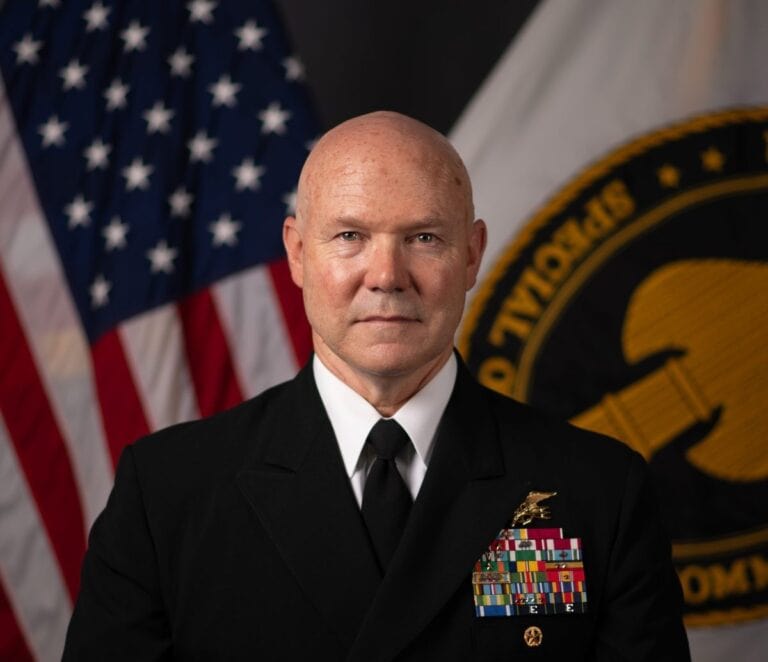
Admiral Frank M. Bradley has been the Commander of U.S. Special Operations Command (USSOCOM) since October 2025. Originally from Eldorado, Texas, ADM Bradley is a 1991 graduate of the United States Naval Academy. He has commanded at all levels of special operations, including Joint Special Operations Command, Special Operations Command Central, and Naval Special Warfare Development Group. He has multiple tours in command of joint task forces and was among the first to deploy into Afghanistan following the attacks of September 11, 2001.
In large-scale combat operations, communication may be the most precious opportunity that we have. —Brig. Gen. Joe Wortham After a protracted war period from 2001 to 2021, the U.S. Army is trying to make sense of what it did during those years and what it will likely be required to do in the future. The U.S. Army, like almost all armies, has a track record of getting it 100 percent wrong. No one knows when, where, or how the Nation will employ the Army in the future.

Microinsurgencies, small-scale armed conflicts over natural resources internal to one country, are not necessarily new. Although such conflicts involving natural resource wealth occurred in ancient times, little seems to have been studied and published about the interaction of these conditions and variables until the late 1900s. For example, the King Scorpion settled and united ancient Egypt in approximately 3150 BC, after centuries of fighting by “dozens of independent chieftains” over control of the Nile River. Whoever controls the Nile still controls the wealth of modern Egypt today. Other examples from the distant past are those of Portugal and Spain with their avarice for gold, silver, precious stones, silks, and spices, even slavery and human trafficking. According to Charles Chasteen, “the Iberian invaders…came to [the Americas] seeking success in the terms dictated by their society: riches, the privilege of being served by others, and a claim to religious righteousness.” Jasper Humphreys offers another example below.

By Aaron Knowles
Transitioning out of the military is challenging for any service member. But for those coming from the Special Operations Forces community, the experience carries a unique set of pressures, expectations, and invisible burdens.
Life in SOF, operator or not, is defined by ...

In 1962 at West Point, John F. Kennedy looked at a corps of future officers and told them their wars would not look like their fathers’ wars. He spoke of infiltration instead of invasion, subversion instead of elections, guerrillas by night instead of armies by day. Then he did something more important than give a speech. He acted on his words.
He elevated Special Forces and gave them the Green Beret. He signaled that the quiet, unconventional work of building resistance, strengthening partners, fighting for legitimacy, and contesting narratives was central to American strategy, not a sideshow. He respected the men who lived in the villages, spoke the languages, and worked in the shadows.
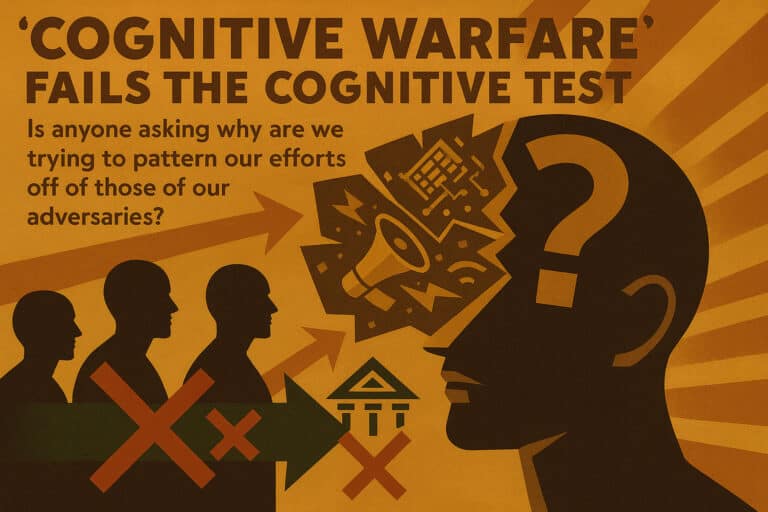
The estimable Frank Hoffman penned1 something that is part literature review of the term “cognitive warfare” and part defense of the term. I trust Frank’s assessments and generally defer to his experience and analytical rigor. In “Assessing Cognitive Warfare,” however, his work is incomplete; it reads as if it were lifted from a larger work. The result is a noble, if flailing, argument that “cognitive warfare” is a term that should be defended. This is, in part, because another nation uses it and because it has some unique value because… I’m not sure… is it because synonymous terms tried by the US over the past century haven’t stuck?
No results found.
Stay Up To Date
Subscribe to Our Newsletter and Stay Up to Date with the Latest Special Operations Forces Support News and Events