News & Briefings
Get the latest news and SOF commentary here. Your source for all news SOF since 2017.
Among the five of us who teach the Irregular Warfare Center’s (IWC) advanced campaigning course (IW401), we have spent a long time watching capable people lose slowly. Not only on the battlefield, where American units almost always prevailed, but in the space above it, where campaigns are designed and where conflicts are so often lost prematurely. The wars in Vietnam, Iraq, and Afghanistan are examples of this — in each case the United States fielded the stronger force and still walked away short of what it set out to achieve. The comfortable explanation is that we executed poorly, and that a little more resolve or a few more resources would have turned the result. Between us we have written numerous campaign plans, in enough joint and combatant command headquarters, as well as interagency strategies at a U.S. embassy, to have reached a less comfortable conclusion. The recurring American failure in irregular warfare and conflict was seldom a failure of execution. Rather, it was the confident pursuit of the wrong problem.
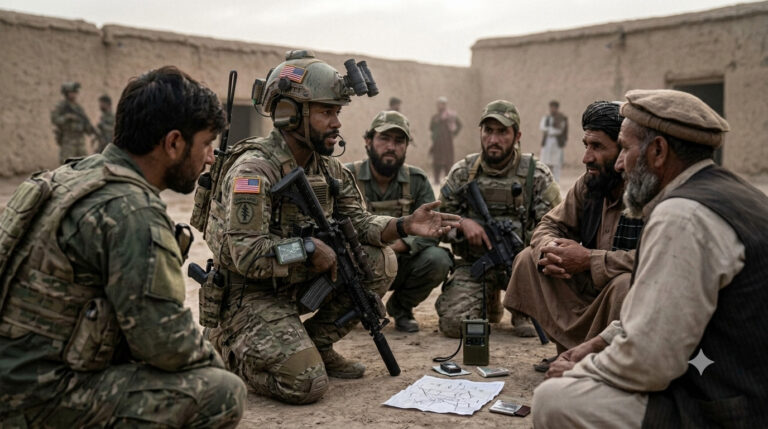
Part 1 (The Operator Is the Platform) established that the SOF operator is the platform and that the validity of any SOF assessment, selection, and qualification (ASQ) system depends on the criterion space the system is built to predict. The logic, that ASQ systems are only as valid as the criterion they predict, carries a specific implication for Army SOF. For the majority of U.S. Army Special Operations Command (USASOC), and particularly for Special Forces, Civil Affairs, and Psychological Operations, the criterion space must be anchored in the force’s foundational missions: unconventional warfare (UW), irregular warfare (IW), and support to political warfare. We refer to these collectively as the first SOF trinity. Among them, UW warrants primacy in selection design, because it most fully exploits the comparative advantage of Army SOF and most clearly reveals the kind of human the force must identify: one capable of organizing, advising, and operating through resistance organizations, undergrounds, auxiliary structures, and indigenous partner forces in denied areas, often for extended duration with minimal external support. Indeed, only Army Special Forces has been organized, trained, equipped, educated, and optimized to conduct UW, and that fact should weigh heavily in how selection criteria are prioritized for the bulk of Army SOF.
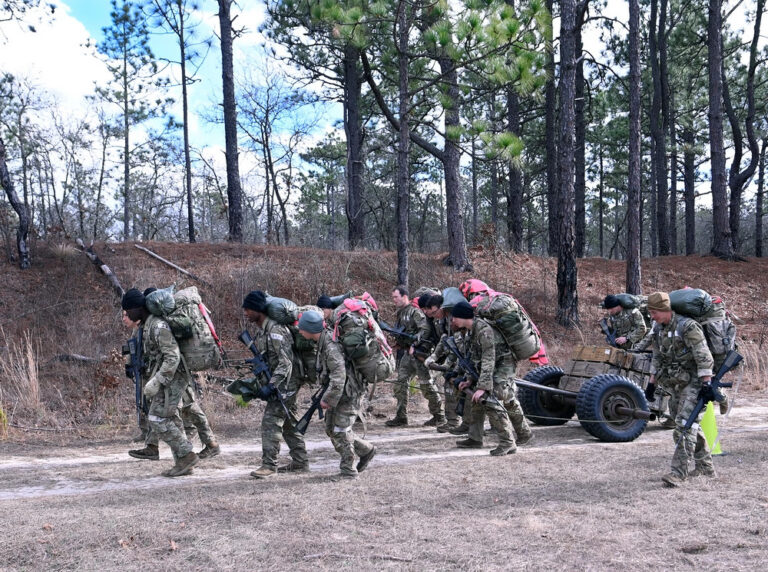
This is the first installment in a four-part series examining how Special Operations Forces (SOF) should assess, select, and qualify operators for the operating environment of 2040. One argument runs through all four parts: in SOF the operator is the platform, so human performance is decisive, and the validity of any assessment, selection, and qualification (ASQ) system depends on the criterion space the system is built to predict, a space that is now shifting. Part 1 establishes the conceptual foundation: why ASQ system validity depends on the definition of success the system targets, how today’s SOF ASQ systems are structured, and the two questions that organize the series. Part 2 anchors the evolving SOF criterion space in the two SOF trinities. Part 3 examines the technology layer, cyber, space, and human-machine teaming, and connects it with those enduring human-domain demands. Part 4 turns to measuring what matters: adaptive performance as the central organizing construct, methods for assessing adaptability and related attributes, and a diagnostic framework for detecting when the criterion has shifted. We begin from the premise that has always defined SOF and will continue to: mission sets evolve, but the SOF operator and their performance remain decisive.
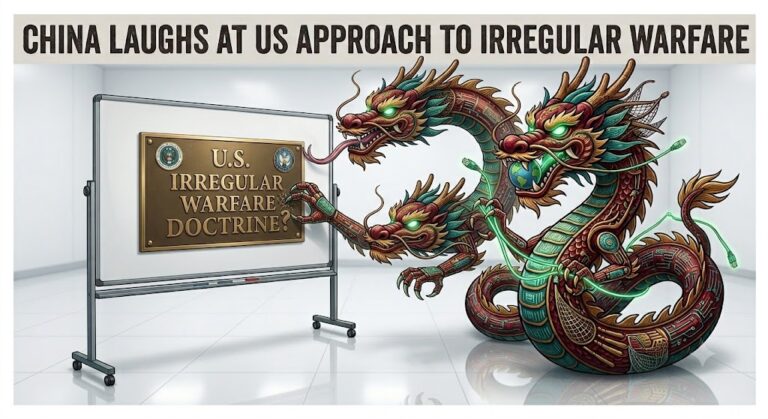
Over the past four years, more than 100 articles and op-eds have dissected irregular warfare—some good, some bad, and some downright ugly. The good ones look past the purely kinetic to explore critical sub-components like cognitive, unconventional, and political warfare. The mediocre ones bog down in bureaucratic debates over which specific command, agency, or organization should manage these units and operations. The worst—and there are many—waste endless ink debating what the definition of irregular warfare should even be.
Reading these semantic debates must give the Chinese Communist Party (CCP) cause for laughter. While the West struggles to even define the concept, China has simply practiced it successfully for millennia.
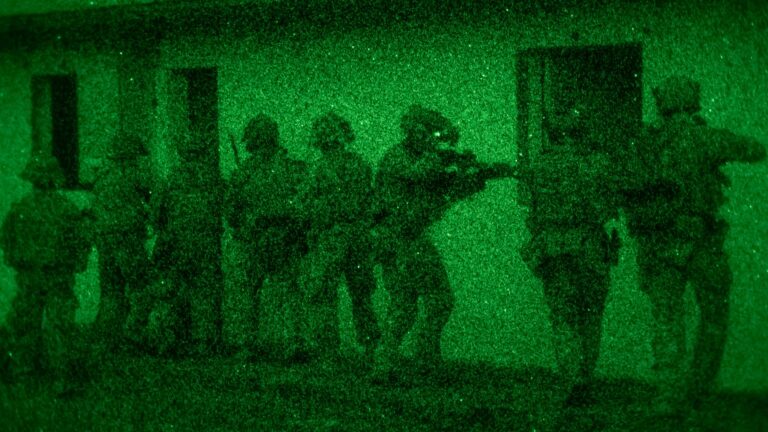
U.S. Special Operations Command (SOCOM) consists of about 70,000 special operations forces (SOF) personnel trained to conduct crucial missions that ensure U.S. national security, shape environments, and counter malign influence worldwide. Often operating in the shadows, around 6,000 SOF operators are deployed in support of dozens of operations across 80 different countries at any given time.
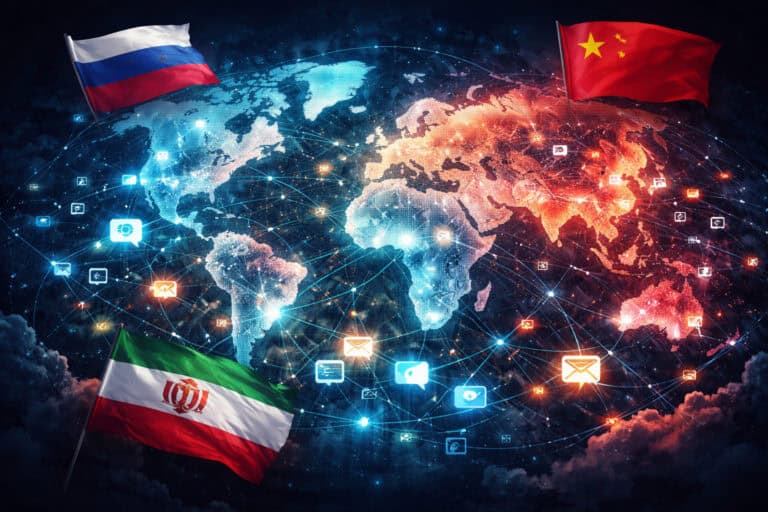
Russia, China, and Iran have developed sophisticated narrative warfare strategies that allow them to shape political outcomes even when facing military or economic disadvantages. Russia relies on reflexive control to fragment adversaries’ perceptions and influence decision-making, while China focuses on long-term discourse shaping through disciplined messaging and institutional influence. Iran leverages revolutionary ideology and theological concepts of resistance to build resilient domestic cohesion and attract diverse external actors. In contrast, the United States continues to rely on a Cold War–era model of persuasion, based on credibility and institutional legitimacy, which often struggles against identity-driven narratives. The article argues that modern conflicts increasingly depend on narrative endurance rather than kinetic dominance, with strategic success often determined by which side maintains belief in its political story rather than which side wins on the battlefield.
No results found.
Stay Up To Date
Subscribe to Our Newsletter and Stay Up to Date with the Latest Special Operations Forces Support News and Events