News & Briefings
Get the latest news and SOF commentary here. Your source for all news SOF since 2017.
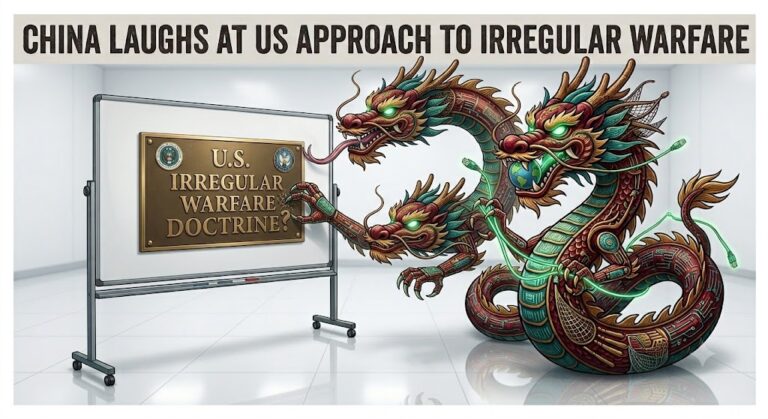
Over the past four years, more than 100 articles and op-eds have dissected irregular warfare—some good, some bad, and some downright ugly. The good ones look past the purely kinetic to explore critical sub-components like cognitive, unconventional, and political warfare. The mediocre ones bog down in bureaucratic debates over which specific command, agency, or organization should manage these units and operations. The worst—and there are many—waste endless ink debating what the definition of irregular warfare should even be.
Reading these semantic debates must give the Chinese Communist Party (CCP) cause for laughter. While the West struggles to even define the concept, China has simply practiced it successfully for millennia.
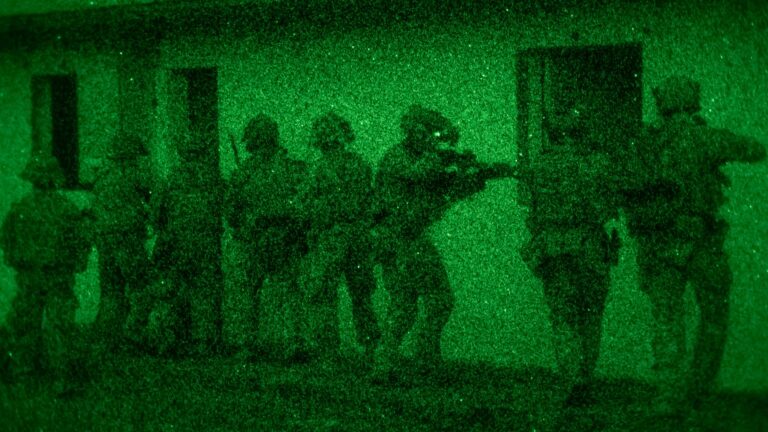
U.S. Special Operations Command (SOCOM) consists of about 70,000 special operations forces (SOF) personnel trained to conduct crucial missions that ensure U.S. national security, shape environments, and counter malign influence worldwide. Often operating in the shadows, around 6,000 SOF operators are deployed in support of dozens of operations across 80 different countries at any given time.
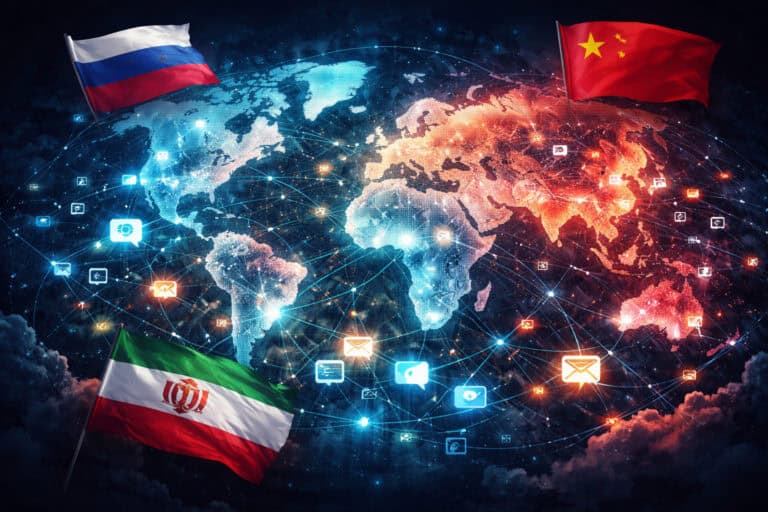
Russia, China, and Iran have developed sophisticated narrative warfare strategies that allow them to shape political outcomes even when facing military or economic disadvantages. Russia relies on reflexive control to fragment adversaries’ perceptions and influence decision-making, while China focuses on long-term discourse shaping through disciplined messaging and institutional influence. Iran leverages revolutionary ideology and theological concepts of resistance to build resilient domestic cohesion and attract diverse external actors. In contrast, the United States continues to rely on a Cold War–era model of persuasion, based on credibility and institutional legitimacy, which often struggles against identity-driven narratives. The article argues that modern conflicts increasingly depend on narrative endurance rather than kinetic dominance, with strategic success often determined by which side maintains belief in its political story rather than which side wins on the battlefield.
Over the last 20 years, the U.S. military has been highly focused on counterinsurgency operations as we engaged in the Global War on Terror (GWOT). This focus, along with expertise in irregular warfare and partner force operations, enabled Special Forces to take a predominant role in Afghanistan and Iraq. Today we face a different world. Competition among the great powers is increasing, requiring the U.S. military to shift focus to prepare for LSCO undertaken against a peer enemy. This transition is a natural fit for the conventional force as tankers prepare for armored clashes, naval officers plan fleet engagements, and pilots contemplate a world without airspace supremacy. For Special Forces, this shift can be more confusing. As divisions and corps become the units of action, where does a small team of Green Berets fit?
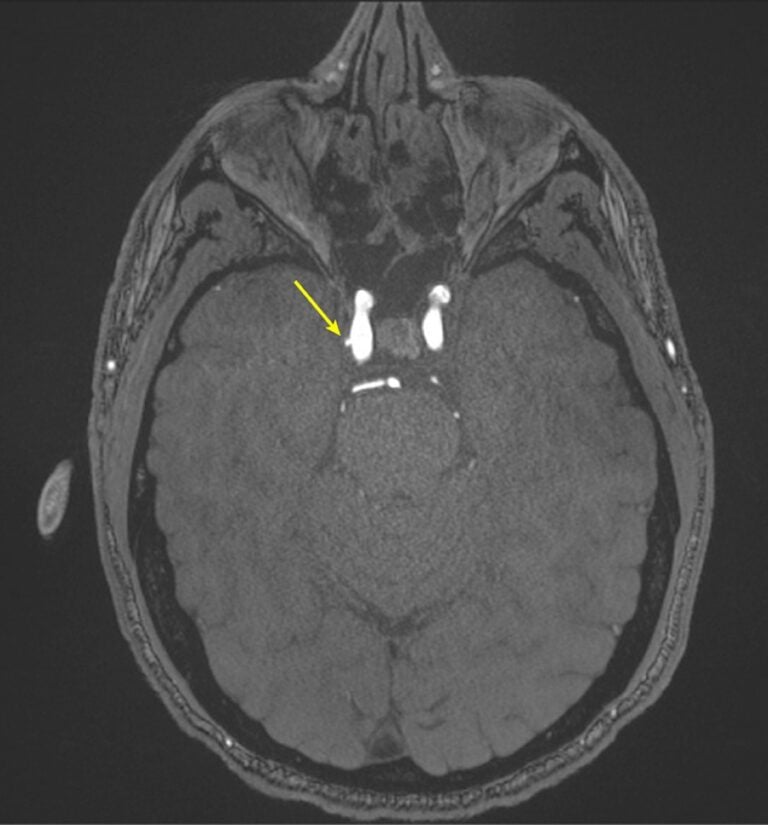
BOSTON — In U.S. Special Operations Forces personnel, greater repeated blast exposure is associated with a higher prevalence of intracranial aneurysms, according to a recent study. An intracranial aneurysm is a weak, bulging area in a blood vessel wall in the brain, often described as balloon-like. While many remain asymptomatic until discovered or ruptured, a burst aneurysm causes a life-threatening hemorrhage that requires immediate medical emergency care.
A recent argument that the United States Army Special Forces have become a campaign afterthought is right about the diagnosis but provides an incomplete assessment of the cure. The decisive terrain of great-power competition is cognition, and the culturally immersed and distributed character of Special Forces—built on a “by, with, and through” —gives the regiment a latent comparative advantage in that contest. Realizing this advantage depends less on new equipment than on professional military education redesigned around four interlocking capacities: complexity analysis; epistemic humility; principled decision-making under uncertainty; and adaptive resilience. Together, these traits amount to the ability to lead in the complex—rather than the complicated—domain.
No results found.
Stay Up To Date
Subscribe to Our Newsletter and Stay Up to Date with the Latest Special Operations Forces Support News and Events