News & Briefings
Get the latest news and SOF commentary here. Your source for all news SOF since 2017.
A question resurfaces in Special Forces circles whenever the Department of Defense/War pivots to a new priority effort: Who are we? It appeared after Vietnam when Groups stood down. It appeared after the Cold War. It appeared in the post-9/11 buildup, and again after the drawdowns from Iraq and Afghanistan. It has reappeared in the era of strategic competition.
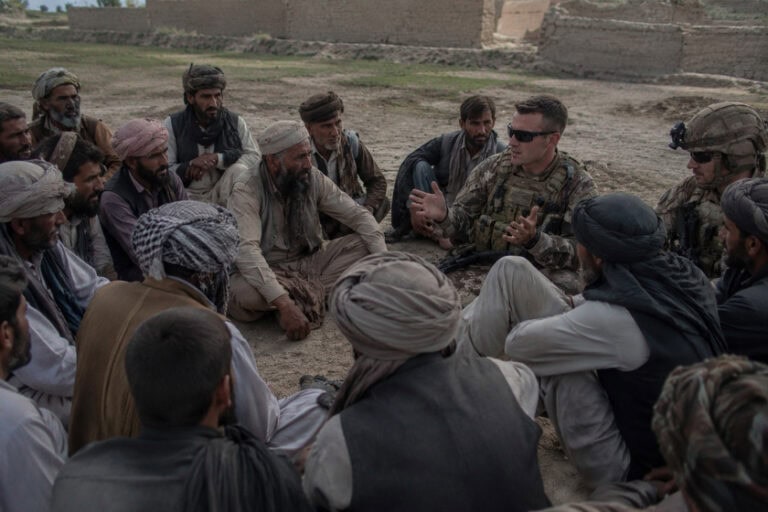
The contemporary security environment is crowded with terminology. Policymakers, strategists, and military professionals routinely discuss gray zone competition, hybrid warfare, cognitive warfare, influence operations, strategic competition, and other related concepts. While each term offers some analytical value, the proliferation of terminology often obscures the enduring nature of conflict. Excessive focus on labels can create intellectual paralysis rather than strategic understanding.
It is hard to read national security literature and social media posts without coming across the term cognitive warfare. The conflict with Iran. China’s current operations. Russia’s way of war. North Korea’s nuclear strategy. Reports from NATO’s chief scientist. Countless articles from national security experts, including distinguished scholars, renowned Special Forces officers, and leading think tanks. The hype surrounding cognitive warfare has even spread beyond the national security space. The journal Pastoral Psychology published an article about cognitive warfare and religion, while Greater Good Magazine, a publication devoted to turning scientific research into tips and tools for a happier life and more compassionate society, has articles about “cog war.”
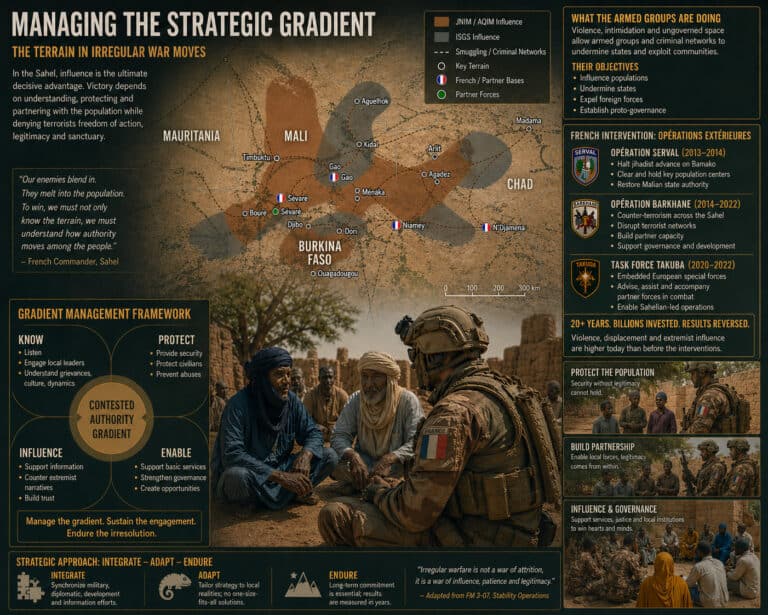
In January 2013, French forces entered Mali to conduct Operation Serval and did what Western militaries do well: they moved fast, hit hard, and pushed jihadist fighters out of the northern cities seized the previous year. By conventional measures, it was a successful operation. Yet within two years those same fighters had returned, were dispersed across a wider area, better networked, and harder to find. By 2019, after years of the follow-on Operation Barkhane, the Sahel was measurably less stable than before the intervention. By 2022, French forces had been expelled entirely. Today the region is among the world’s fastest-growing conflict zones. This is not a story about French incompetence; on the contrary, French forces were skilled and well-led. It is however a story about a recurring pattern that has appeared in the Philippines, Somalia, Iraq, and dozens of campaigns across the last century: the gap between what military intervention can accomplish and what irregular conflict requires.
Results from a study commissioned by the U.S. Special Operations Command (SOCOM) found that members of the special operations forces (SOF) community are facing cancer at a rate 18 percent higher than their conventional forces counterparts.
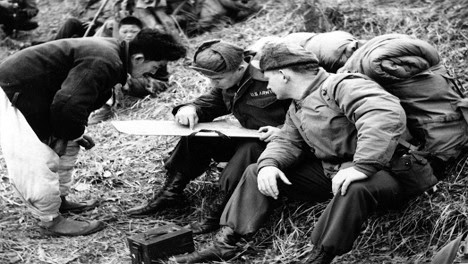
When I wrote the opening paragraph above into doctrine more than a decade ago, I used the word “overlooked,” but overlooked is the wrong word and too forgiving. To be overlooked is to be missed for lack of attention. Special Forces does not suffer from a lack of attention. It suffers from misperception, which is the harder problem, because misperception arrives wearing the face of a compliment. The romantic picture in that passage, the commando striking from the shadows with speed and violence and cutting-edge gear, was never the Special Forces mission its founders set out to build. It describes the Ranger, or one of the other strike formations within U.S. Special Operations Forces, the formations built to enter a target and be gone before dawn. That image was borrowed and overlaid on the green beret, and the result has been two decades of judging Special Forces for failing to be the force it was never originally designed to be.
No results found.
Stay Up To Date
Subscribe to Our Newsletter and Stay Up to Date with the Latest Special Operations Forces Support News and Events