News & Briefings
Get the latest news and SOF commentary here. Your source for all news SOF since 2017.
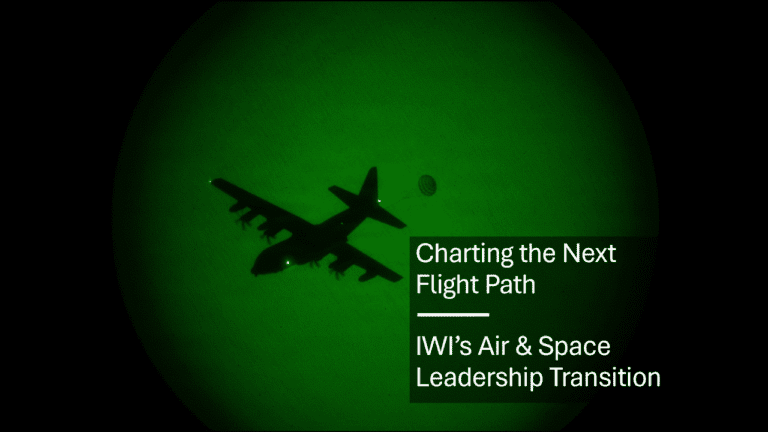
For three years, I’ve watched with excitement as Dr. Kerry Chavez and Dr. Rick “Newt” Newton built and expanded IWI’s Air and Space Power Initiative into the premier forum driving the discussion of the role for air and space power in irregular warfare. It is a great honor to take on leadership of this program moving forward, and I eagerly look forward to both their and your continued contributions to this vital area of international security. Five years after the fall of Kabul, faced with the continuing rise of peer threats and ongoing conflicts in Ukraine and Iran, the debate surrounding the proper role for air and space power across the spectrum of conflict remains at a critical inflection point.
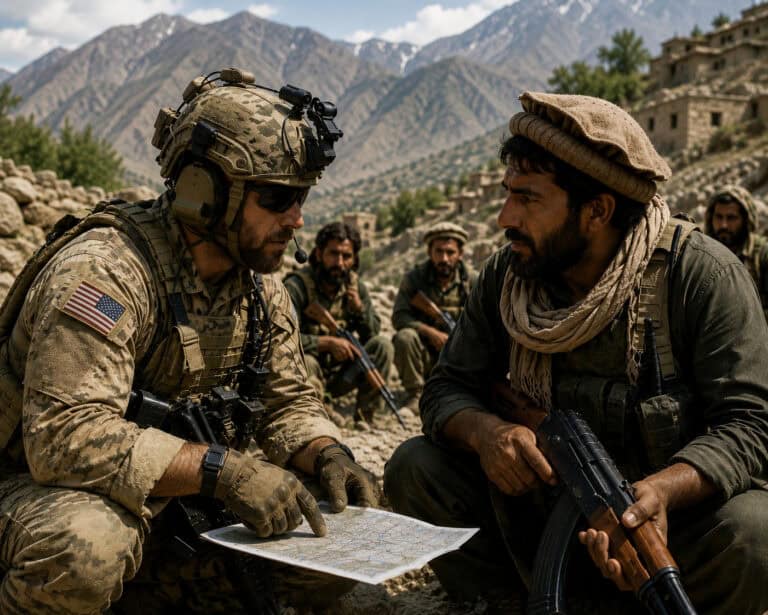
I read Ned Marsh’s two recent articles about the serious challenges Special Forces (SF) face in the current and future operating environments with great interest. Much of what he says seems valid, but not all of what he says. Plus, there are some internal inconsistencies in his argument. Still, his ideas are valuable insights for serious consideration. I will not offer another detailed critique of Marsh’s ideas. That has already been done by others. But properly diagnosing the problem is key for generating effective solutions. My intent is to address the ‘blind spot’ that stands in the way of Special Forces ‘strategic utility,’ a non-trivial point that is rarely addressed.
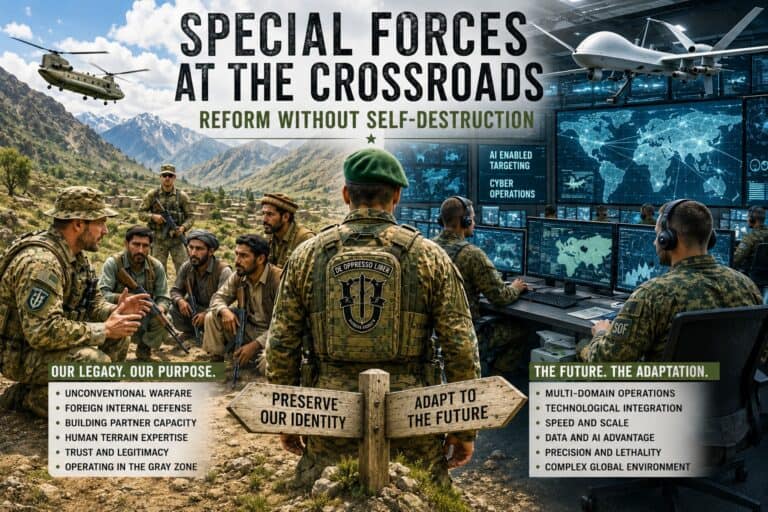
In two recent articles at the Irregular Warfare Initiative—The Last A-Team: Special Forces Aren’t Special Anymore and A New Vision for Special Forces—Ned Marsh has performed a valuable service for the Special Forces Regiment and the broader national security community. He has forced a serious debate about whether U.S. Army Special Forces remains organized trained, equipped, educated, and optimized, for the realities of strategic competition and contested warfare in the Asia-Indo-Pacific, Europe, Africa, Latin America, and the Middle East. His critique is sharp because it addresses real problems. He correctly notes that the contemporary battlefield is saturated with surveillance, drones, biometrics, cyber collection, and electronic warfare. The operational environment has changed faster than many military institutions have adapted. Those realities cannot be dismissed.

When Admiral Frank Bradley told SOF Week 2026 that the force needs “PhDs who can win a bar fight,” he was reaching back to William Donovan’s eighty-year-old framing of the OSS operator. He was right to. But the dichotomy embedded in the joke is false—and the institutional habit of treating it as real is the deepest reason the conventional pipeline keeps failing to produce what Bradley is asking for.

One can be forgiven for not associating Gen. James Van Fleet with special operations or Special Forces. He is best known as the commander of the U.S. Eighth Army from April 1951 to February 1953 during the Korean War. The majority of Van Fleet’s career was spent in traditional infantry roles, as a machine gun battalion commander in World War I and as a regimental, division, and corps commander during World War II. However, his assignment as head of the Joint United States Military Advisory Group, Greece (JUSMAG-Greece) in 1948, and his leadership and design of “Operation Rat Killer” during the Korean War, should grab our attention.01
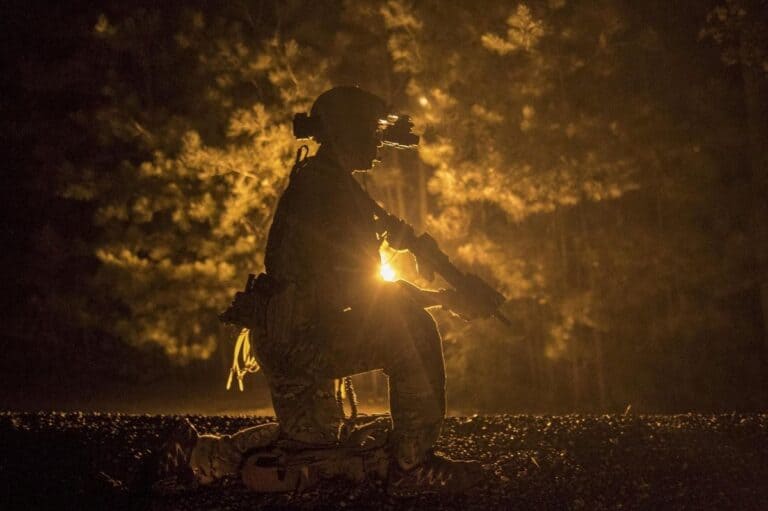
Woven through contemporary debate are threads of different schools of thought that cross but lack a central thread which closes the seam. One school of thought sees a return of great power competition and argues for an emphasis on lethality and warfighting competency. Another sees a change in the character of conflict and competition where adversaries pursue their ends in the space between peace and war. Above all, and critical to stitching multiple paradigms together, is the one which is eternal in all war and immutable—the human domain. War is always a political act done by humans.
No results found.
Stay Up To Date
Subscribe to Our Newsletter and Stay Up to Date with the Latest Special Operations Forces Support News and Events