News & Briefings
Get the latest news and SOF commentary here. Your source for all news SOF since 2017.

Special Operations Research: Out of the Shadows marked an important moment in the development of special operations scholarship. Published in the inaugural issue of Special Operations Journal (SOJ), which later evolved into Inter Populum: The Journal of Irregular Warfare and Special Operations, Christopher Marsh, James Kiras, and Patricia Blocksome’s article argued that special operations research remained underdeveloped despite the growing strategic importance of SOF around the world. 11 years have passed since the writing of this piece and the SOF and IW community have made incredible strides to fill this gap, though there is always room for improvement. Dr. Marsh and Dr. Kiras are the Editors-in-Chief at Inter Populum, along with Dr. Ryan Shaw of Arizona State University.
Special Operations Forces (SOF) thrive in ambiguous, chaotic environments because the principles of chaos theory directly enable and accelerate innovation in modern warfare. To understand this connection, it is important to explore the interconnections between chaos theory and innovation. This analysis defines their key principles, highlights their similarities, and shows how SOF uniquely leverages these dynamics to create operational advantages.

The convergence of artificial intelligence (AI) and non-kinetic irregular warfare (IW) represents both a qualitative shift in the nature of strategic threat and a quantitative increase in adversarial operational effectiveness. To be sure, IW has always relied upon exploitation of asymmetries of expectation, capability, attribution, legality, and response thresholds. Certainly asymmetries, and tactics like indirect approaches (e.g., employing covert and clandestine and non-kinetic operations) are factors in both regular warfare and IW. AI affords unprecedented capacity to operationalize these asymmetries and tactics at scale, and when employed within IW (often within a paradigm of “matrix operations” to coordinate exceedingly large number of participants in/across vast networks), can afford speed and precision to enable minimal cost (of resources and personnel) and augmented effectiveness of such engagements. Indeed, current peer competitors and state adversaries have explicitly recognized that strategic objectives can be achieved through persistent sub-threshold engagements that avoid triggering conventional military retaliation.
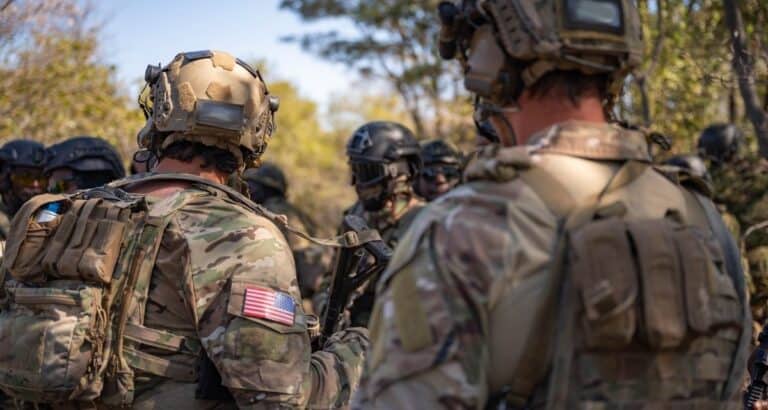
In 2013, Army Chief of Staff General Raymond Odierno, Marine Corps Commandant General James Amos, and commander of US Special Operations Command Admiral William McRaven cosigned a document that should have grabbed the attention of the entire American defense establishment. Its central observation was unambiguous: The Pentagon’s concept of competition does not reflect the fundamental reality that “competition and conflict are about people.” A decade later, the Army proposed cutting its special operations forces by up to 20 percent. Congress felt compelled to insert a $20 million provision into the 2024 National Defense Authorization Act simply to make permanent US special operations forces’ ability to conduct irregular warfare by, with, and through partners. The defense establishment continued its decade-long debate about whether irregular warfare capabilities are still needed at all. The warning from three four-star generals produced no durable institutional change. Why? And what should the defense establishment do about it now?
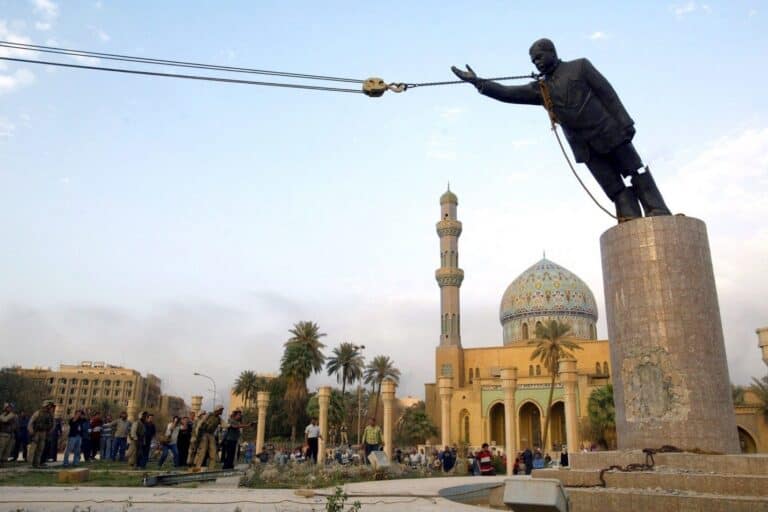
For more than two decades, U.S. national security policy has repeatedly relied on leadership decapitation as a mechanism for catalyzing systemic change. In practice, this has often meant turning to military force as the primary instrument for resolving problems rooted in political decay, institutional corruption, and fractured legitimacy.

Lt. Col. George Armstrong Custer led approximately 600 soldiers of the 7th Cavalry against a Native American coalition of 4,000 to 8,000 people, led by Sitting Bull, Crazy Horse, Gall, and Two Moons. The Native Americans deployed decentralized command, superior terrain knowledge, mobility, psychological warfare, and cultural cohesion to defeat Custer’s force at Last Stand Hill, killing over 200 soldiers. The authors argue that Custer’s fatal underestimation of his opponent, combined with fractured command and control and a failure to conduct adequate intelligence preparation, exposed his force to a series of encirclements that his divided units could not survive.
No results found.
Stay Up To Date
Subscribe to Our Newsletter and Stay Up to Date with the Latest Special Operations Forces Support News and Events