News & Briefings
Get the latest news and SOF commentary here. Your source for all news SOF since 2017.
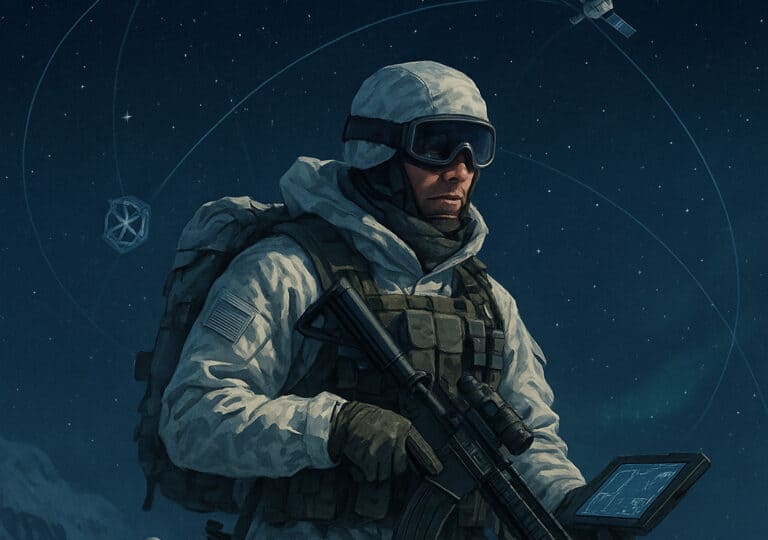
New frontiers of strategic competition beckon for immediate special operations forces (SOF) transformation to prevail in the space domain and the polar regions. Aligned with Assistant Secretary of Defense for Special Operations and Low Intensity Conflict Colby Jenkins’ call to think differently and work together, this article proposes two enhanced roles for combined SOF in the competition sphere—a Space Joint Terminal Attack Controller(SJTAC) function and an emphasis on “reverse” security force assistance (SFA) for selected NATO Arctic allies who rely on the principle of “collective defense” for national security. While numerous efforts across the U.S. Air Force Special Operations Command and U.S. Space Force aim to meet the “all-domain fires” demand, and Allied Arctic-focused trainingand exercises have been in place for decades, this essay offers refined proposals in both areas for SOF. While seemingly distinct, both converge in the Arctic, where NATO SOF will require on-call space-based capabilities coupled with SFA essential for High North survivability and success.
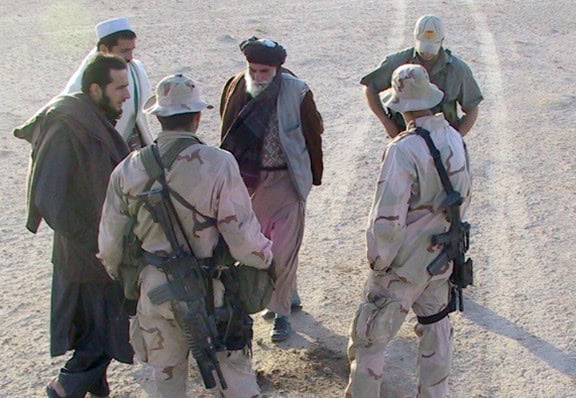
The closeout of the Global War on Terror and the contentious politics over the withdrawal from Afghanistan gave the Army every opportunity to avoid deliberate introspection about institutional performance in fulfilling the various missions assigned to it. In particular, Security Force Assistance – the training and development of foreign military forces and institutions – was widely viewed as a mission that failed writ large.
After the failure to build a sustainable Afghan military that could survive without U.S. presence, many scholars and practitioners now argue that U.S. efforts to build foreign militaries are nearly predestined to fail and should rarely, if ever, be undertaken. In Training for Victory: U.S. Special Forces Advisory Operations from El Salvador to Afghanistan, Frank Sobchak pushes back against this view, arguing that “…we have not failed because advising our allies is too hard; we’ve failed because we have never taken it seriously …Building foreign militaries is a difficult, long-term, and often thankless endeavor. But it is not impossible” (2024, 177).
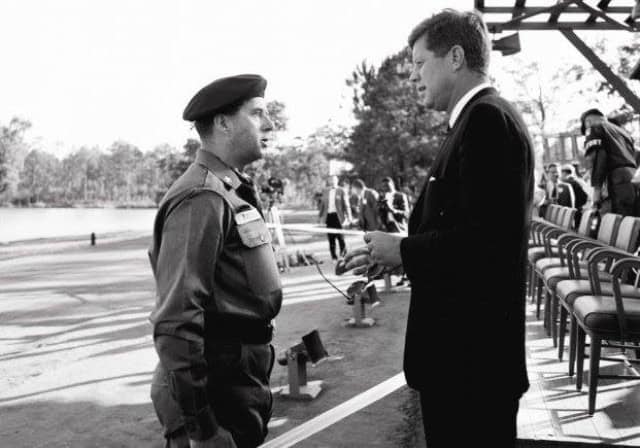
De Oppresso Liber, “To Free the Oppressed,” is more than the official motto of the U.S. Army Special Forces (SF); it encapsulates an all-encompassing philosophy rooted in resistance, the pursuit of liberty, and the strategic practice of statecraft. The SF soldier is not a mere tactician of clandestine action but an archetype of the modern strategist-statesman, uniquely trained to navigate the ambiguities of revolution, insurgency, civil conflict, and terrorism. In this capacity, the SF soldier embodies a blend of traditions and philosophies that place the highest value on freedom, human dignity, and self-determination, while remaining grounded in moral clarity and strategic prudence.
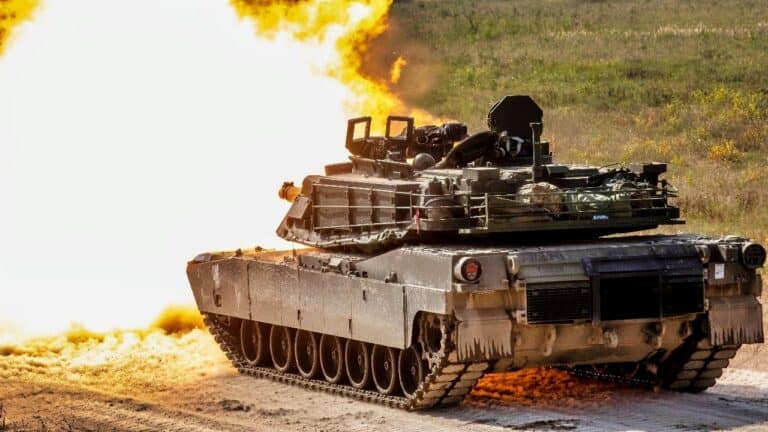
The U.S. Army is grappling with the emergence of agentic warfare—the convergence of artificial intelligence (AI), autonomous systems, and algorithmically driven operations that promises to transform the conduct of war.

The world is about to enter the era of agentic warfare. In this article, we outline a theory of agentic warfare and use it to define what the United States should do to maintain its military power in this era. Although the United States may have embraced the potential of AI in the aftermath of World War II, its future is up for grabs.
No results found.
Stay Up To Date
Subscribe to Our Newsletter and Stay Up to Date with the Latest Special Operations Forces Support News and Events