News & Briefings
Get the latest news and SOF commentary here. Your source for all news SOF since 2017.
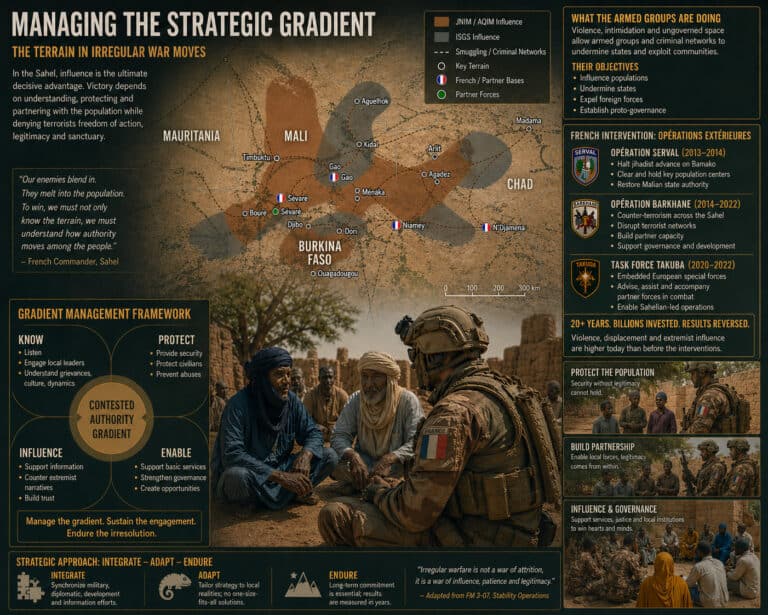
In January 2013, French forces entered Mali to conduct Operation Serval and did what Western militaries do well: they moved fast, hit hard, and pushed jihadist fighters out of the northern cities seized the previous year. By conventional measures, it was a successful operation. Yet within two years those same fighters had returned, were dispersed across a wider area, better networked, and harder to find. By 2019, after years of the follow-on Operation Barkhane, the Sahel was measurably less stable than before the intervention. By 2022, French forces had been expelled entirely. Today the region is among the world’s fastest-growing conflict zones. This is not a story about French incompetence; on the contrary, French forces were skilled and well-led. It is however a story about a recurring pattern that has appeared in the Philippines, Somalia, Iraq, and dozens of campaigns across the last century: the gap between what military intervention can accomplish and what irregular conflict requires.
Results from a study commissioned by the U.S. Special Operations Command (SOCOM) found that members of the special operations forces (SOF) community are facing cancer at a rate 18 percent higher than their conventional forces counterparts.
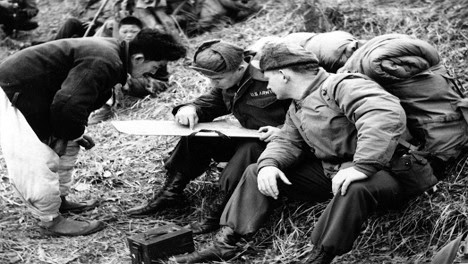
When I wrote the opening paragraph above into doctrine more than a decade ago, I used the word “overlooked,” but overlooked is the wrong word and too forgiving. To be overlooked is to be missed for lack of attention. Special Forces does not suffer from a lack of attention. It suffers from misperception, which is the harder problem, because misperception arrives wearing the face of a compliment. The romantic picture in that passage, the commando striking from the shadows with speed and violence and cutting-edge gear, was never the Special Forces mission its founders set out to build. It describes the Ranger, or one of the other strike formations within U.S. Special Operations Forces, the formations built to enter a target and be gone before dawn. That image was borrowed and overlaid on the green beret, and the result has been two decades of judging Special Forces for failing to be the force it was never originally designed to be.
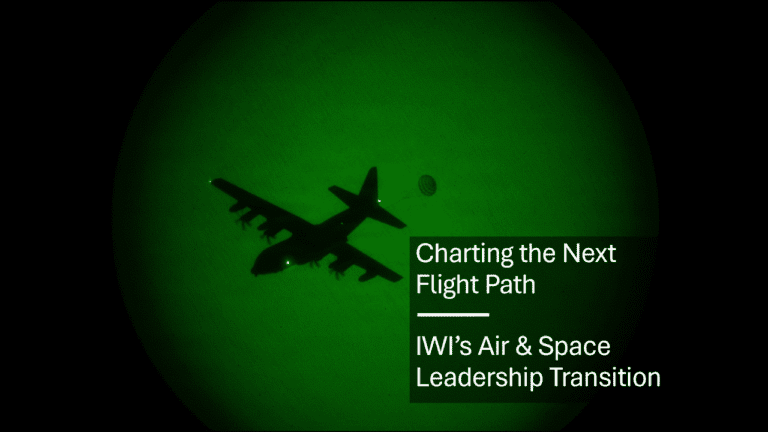
For three years, I’ve watched with excitement as Dr. Kerry Chavez and Dr. Rick “Newt” Newton built and expanded IWI’s Air and Space Power Initiative into the premier forum driving the discussion of the role for air and space power in irregular warfare. It is a great honor to take on leadership of this program moving forward, and I eagerly look forward to both their and your continued contributions to this vital area of international security. Five years after the fall of Kabul, faced with the continuing rise of peer threats and ongoing conflicts in Ukraine and Iran, the debate surrounding the proper role for air and space power across the spectrum of conflict remains at a critical inflection point.
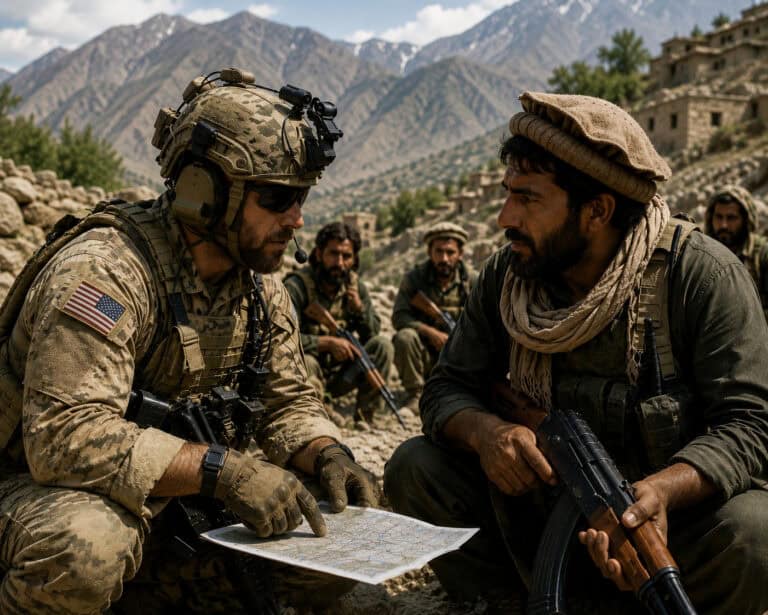
I read Ned Marsh’s two recent articles about the serious challenges Special Forces (SF) face in the current and future operating environments with great interest. Much of what he says seems valid, but not all of what he says. Plus, there are some internal inconsistencies in his argument. Still, his ideas are valuable insights for serious consideration. I will not offer another detailed critique of Marsh’s ideas. That has already been done by others. But properly diagnosing the problem is key for generating effective solutions. My intent is to address the ‘blind spot’ that stands in the way of Special Forces ‘strategic utility,’ a non-trivial point that is rarely addressed.
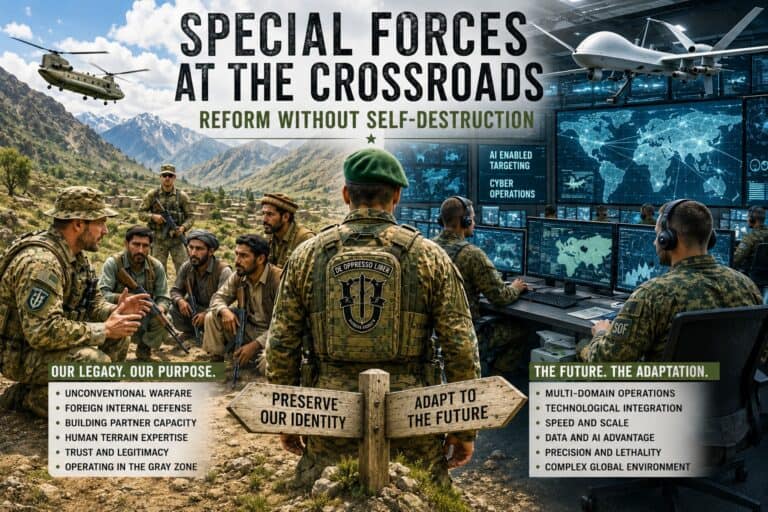
In two recent articles at the Irregular Warfare Initiative—The Last A-Team: Special Forces Aren’t Special Anymore and A New Vision for Special Forces—Ned Marsh has performed a valuable service for the Special Forces Regiment and the broader national security community. He has forced a serious debate about whether U.S. Army Special Forces remains organized trained, equipped, educated, and optimized, for the realities of strategic competition and contested warfare in the Asia-Indo-Pacific, Europe, Africa, Latin America, and the Middle East. His critique is sharp because it addresses real problems. He correctly notes that the contemporary battlefield is saturated with surveillance, drones, biometrics, cyber collection, and electronic warfare. The operational environment has changed faster than many military institutions have adapted. Those realities cannot be dismissed.
No results found.
Stay Up To Date
Subscribe to Our Newsletter and Stay Up to Date with the Latest Special Operations Forces Support News and Events