News & Briefings
Get the latest news and SOF commentary here. Your source for all news SOF since 2017.
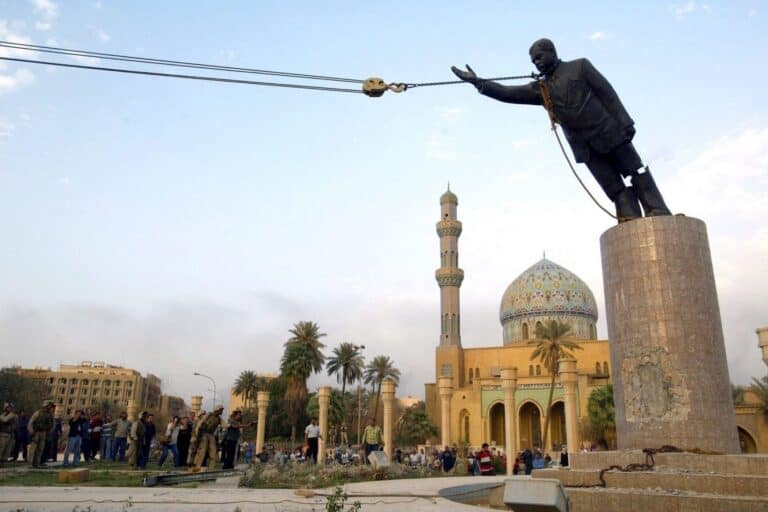
For more than two decades, U.S. national security policy has repeatedly relied on leadership decapitation as a mechanism for catalyzing systemic change. In practice, this has often meant turning to military force as the primary instrument for resolving problems rooted in political decay, institutional corruption, and fractured legitimacy.

Lt. Col. George Armstrong Custer led approximately 600 soldiers of the 7th Cavalry against a Native American coalition of 4,000 to 8,000 people, led by Sitting Bull, Crazy Horse, Gall, and Two Moons. The Native Americans deployed decentralized command, superior terrain knowledge, mobility, psychological warfare, and cultural cohesion to defeat Custer’s force at Last Stand Hill, killing over 200 soldiers. The authors argue that Custer’s fatal underestimation of his opponent, combined with fractured command and control and a failure to conduct adequate intelligence preparation, exposed his force to a series of encirclements that his divided units could not survive.

In the current landscape of strategic competition and irregular warfare, the ability to operate covertly in the financial domain is a critical component of mission success. As nations and non-state actors compete for influence, the tools of unconventional warfare increasingly extend beyond the kinetic. Crypto has rapidly grown as a method to store and transfer value, providing speed, global reach, and 24/7 availability. For Special Operations Forces (SOF) tasked with enabling partner elements, conducting stabilization activities, or executing sensitive missions in politically complex environments, it offers an additional tool – provided crypto’s advantages and vulnerabilities are understood and effectively managed.

United States Special Operations Forces (SOF) are increasingly evaluated through conventional readiness frameworks that degrade the human capital and relational capabilities essential to irregular competition. This article argues that military leaders must optimize SOF primarily for irregular competition by redefining readiness metrics, decoupling SOF employment from conventional readiness cycles, and institutionalizing disciplined mission selection—even at the cost of reduced preparedness for large-scale conventional conflict.

Western military thought often assumes that faster sensors and better data lead to faster action. In gray-zone competition, however, ambiguity over escalation thresholds creates a gap between recognition and authorization, allowing decisional authority to lag behind situational awareness. When that gap becomes predictable, hesitation itself transfers tempo to adversaries operating comfortably between peace and conflict.

SOF does not administer governance. It operates where governance determines what is possible. That distinction matters. Operators encounter this terrain long before doctrine has language to describe it.
In modern irregular warfare, outcomes are increasingly decided before the first shot is fired. They are decided in regulatory frameworks, compliance regimes, and bureaucratic authority structures: the administrative terrain that shapes access, defines escalation thresholds, and determines who is authorized to act. SOF has been operating in this terrain for years. The community already understands it intuitively. The problem is that doctrine has not caught up. The intelligence that operators collect on governance fracture, regulatory capture, and institutional coercion risks staying isolated at the team level rather than informing theater-level planning.
No results found.
Stay Up To Date
Subscribe to Our Newsletter and Stay Up to Date with the Latest Special Operations Forces Support News and Events