News & Briefings
Get the latest news and SOF commentary here. Your source for all news SOF since 2017.
“Evolution is driven by chance and necessity.”
This was the mantra of Nobel Prize winner Jacques Monod. While Monod was primarily known for his work as a French biologist and philosopher, he also served as Chief of Staff for Operations for the French resistance organization, the Forces Françaises de l’Interieur, during the Second World War. A true Renaissance man, he was equally adept at both exploring the field of enzymology and conducting railroad bombings. Monod’s evolutionary principle applies seamlessly to both protein enzymes and irregular warfare, as it offers a useful analytical lens for understanding the adaptation of military organizations to the evolving character of warfare.
Abstract: The competition between terror movements and counterterrorism forces is an interactive and iterative game, as the actions taken by one side are designed to defeat, circumvent, or shape the activity taken by the opposing players. To better understand these interactive dynamics, it is important to evaluate how terrorism and counterterrorism have been evolving. This article first takes high-level stock of how the spread, structure, scale, and speed of terrorism have been changing in recent years and highlights key challenges and implications for counterterrorism. It then evaluates the United States’ ongoing effort to find a sustainable counterterrorism path, a journey that has been filled with challenges, benefits, dilemmas, and opportunities, and discusses how key factors have been shaping the direction, reach, and pace of change. An important takeaway from these reviews is that while the threat of international terrorism is not what it used to be, there is a lot of change occurring across the terrorism landscape. U.S. counterterrorism has also been undergoing some important shifts, and there are open questions about whether U.S. CT forces and assets will be spread further. If not managed carefully, change taking place across these two ‘systems’ could interact in ways that may disrupt CT progress.
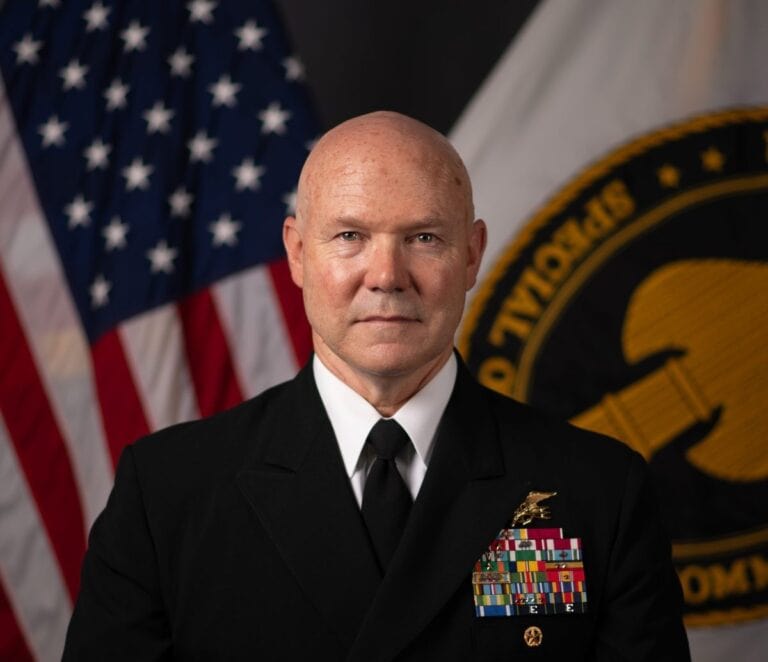
Admiral Frank M. Bradley has been the Commander of U.S. Special Operations Command (USSOCOM) since October 2025. Originally from Eldorado, Texas, ADM Bradley is a 1991 graduate of the United States Naval Academy. He has commanded at all levels of special operations, including Joint Special Operations Command, Special Operations Command Central, and Naval Special Warfare Development Group. He has multiple tours in command of joint task forces and was among the first to deploy into Afghanistan following the attacks of September 11, 2001.
In large-scale combat operations, communication may be the most precious opportunity that we have. —Brig. Gen. Joe Wortham After a protracted war period from 2001 to 2021, the U.S. Army is trying to make sense of what it did during those years and what it will likely be required to do in the future. The U.S. Army, like almost all armies, has a track record of getting it 100 percent wrong. No one knows when, where, or how the Nation will employ the Army in the future.

Microinsurgencies, small-scale armed conflicts over natural resources internal to one country, are not necessarily new. Although such conflicts involving natural resource wealth occurred in ancient times, little seems to have been studied and published about the interaction of these conditions and variables until the late 1900s. For example, the King Scorpion settled and united ancient Egypt in approximately 3150 BC, after centuries of fighting by “dozens of independent chieftains” over control of the Nile River. Whoever controls the Nile still controls the wealth of modern Egypt today. Other examples from the distant past are those of Portugal and Spain with their avarice for gold, silver, precious stones, silks, and spices, even slavery and human trafficking. According to Charles Chasteen, “the Iberian invaders…came to [the Americas] seeking success in the terms dictated by their society: riches, the privilege of being served by others, and a claim to religious righteousness.” Jasper Humphreys offers another example below.

By Aaron Knowles
Transitioning out of the military is challenging for any service member. But for those coming from the Special Operations Forces community, the experience carries a unique set of pressures, expectations, and invisible burdens.
Life in SOF, operator or not, is defined by ...
No results found.
Stay Up To Date
Subscribe to Our Newsletter and Stay Up to Date with the Latest Special Operations Forces Support News and Events